
1 Amazing History of Quilting and the Sewing Machine
The history of quilting and the sewing machine are almost two separate subjects but are so intertwined as to make them into one continuing subject.
This history tells of how quilting began and the development of the sewing machine. It shows the different styles of quilting and a sample of some of the stitches used. Takes a look at companies and some of the museums around the world.
Sit back, get yourself a cup of tea or something a little stronger whilst you sit and relax whilst reading the history.
For those of you who wish to explore individual extracts there is an interactive index below that you can click. To return to the top of page anytime click the small arrow bottom right. Enjoy.
History of Quilting and the Sewing Machine
Inventors and Inventions
One thing that never ceases to amaze is the fact that every generation thinks they are the inventors like no one before them existed. Little do people realise or appreciate how advanced and inventive people were in days gone by.
Whether the Egyptians building the Pyramids or the Romans building their roads and steam baths to the Edwardians and Victorians making amazing mechanical discoveries hundreds of years ago. Discoveries and practices that are still in force today including that of the sewing machine.
Many discoveries people today try to improve on forgetting the basics of why they were invented in the first place.
Got your drink yet? Here goes. You may or may not have a drink in hand but I hope you will find what you read useful and informative.
To assist non quilters unfamiliar with some of the quilting terms a simple (hopefully) explanation or links for further reading are added where appropriate.
History of Quilting and the Sewing Machine
Oldest Known Evidence Of Sewn Clothing
In 1958 an amateur archaeologist discovered pieces of animal hide that Indigenous people stitched together with plant and animal cords.
They were found in a cave in Oregon USA.
It appears everything has laid dormant since their discovery until a study was made of them. It was also the first study to date them. This was published 4th February 2026 in the journal Science Advances.
What they concluded was that the 55 pieces of crafted animal and plant materials. Including sewn hide, cords and twine — stemmed from the Younger Dryas Period (The Time of Cooling in the Northern Hemisphere and Warming in the Southern)
The researchers wrote that although its exact use is unknown, the sewn hide is “quite possibly a fragment of clothing or footwear,” which would represent the only known item of clothing recovered from the Pleistocene to date.
This would date it from about 12,900 to 11,700 years ago during the Ice Age.
History of Quilting and the Sewing Machine
What Is Quilting?
This is a very simplistic way of describing what quilting is.
An artist paints. A quilter instead of using paint uses individual pieces of material.
If reading this as a none quilter the four main methods are Applique, Medallion, Block and WholeQuilt. These are described below.
History of Quilting and the Sewing Machine
Skills Of The Quilter
Anyone can be a quilter, both male and female. However Quilters have always been and are predominantly women.
When none quilters look at a quilt they may think it a glorious piece of work to look at and even congratulate the person who has done it. However how many think how clever and skilful that person is? Even quilters themselves in many cases don’t realise how skilful they are.
All will strive for perfection but not being perfect is OK. It is their work and what they have done. It is unique.
Here is a list of just some of the skills needed and developed by quilters. All good for keeping the mind active. You can probably think of more.
Thinking Looking Deciding. Thinking about and deciding on a project. This includes the looking such as seeing a picture or card to trace to turn into your own project.
Visualising The Final Outcome
Deciding On Colours
Selecting and Shopping For Material
Being Open Minded and Adaptable To Change
Know How To Operate A Sewing Machine
Know How To Do Running Repairs To The Machine If It Goes Wrong
Having Patience,
Dedication and Determination
Good Communicator Open Minded and Not Afraid To Ask Questions
Be A Researcher To Teach Yourself
Have The Ability To Work On Your Own Or In Groups
Ability To Work To The Smallest Detail
Be A Mathematician To Work Out and Measure and Cut Precise Cloth Pieces
Be A Teacher To Others As Expertise Developes
In summary Quilters have multiple skills that many do not realise they have that has the potential to aid mobility, interest and brain.
History of Quilting and the Sewing Machine
Survival
The layering of padding and fabric was initially all about survival. Whether separate layering of leather or animal fleece and then the stitching of it together with whatever was available to keep warm. Until recently this was always believed to go back to 3400 BC but now it is known to be a lot further back in history.
History of Quilting and the Sewing Machine
Knights Crusaders
The first reference to quilted garments in Europe appear to be the aketon or gambeson. This was worn under armour and later developed into the doublet.
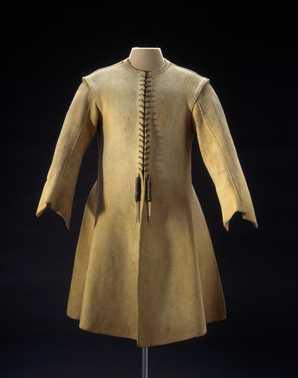
Example Gameson 1660-70 Central Museum Utrecht
These first references appear to be from the 12th Century at the time of the Crusades.
This under armour clothing became an essential clothing item and remained so for over 300 years until the 1600’s.
History of Quilting and the Sewing Machine
Oldest Quilted Carpet
Found in a Mongolian cave and dated to between 100 BC and 200 BC is a quilted piece of a linen carpet believed to be the oldest surviving example of it’s type.
It is now entrusted for safe keeping to the Russian Academy of Sciences, Archaeology Section in Saint Petersburg.
History of Quilting and the Sewing Machine
Oldest Decorative Quilt
One of the earliest surviving decorative quilts in the world is the Tristan Quilt made in Sicily about 1360.
At least two sections survive. One at the V&A Museum (London) and the other in Bargello (Florence). Another of the Tristan and Isolde story is held in a private collection.
They are the only known surviving examples of medieval quilts and are made from two layers of linen, stitched together with wadding in between.
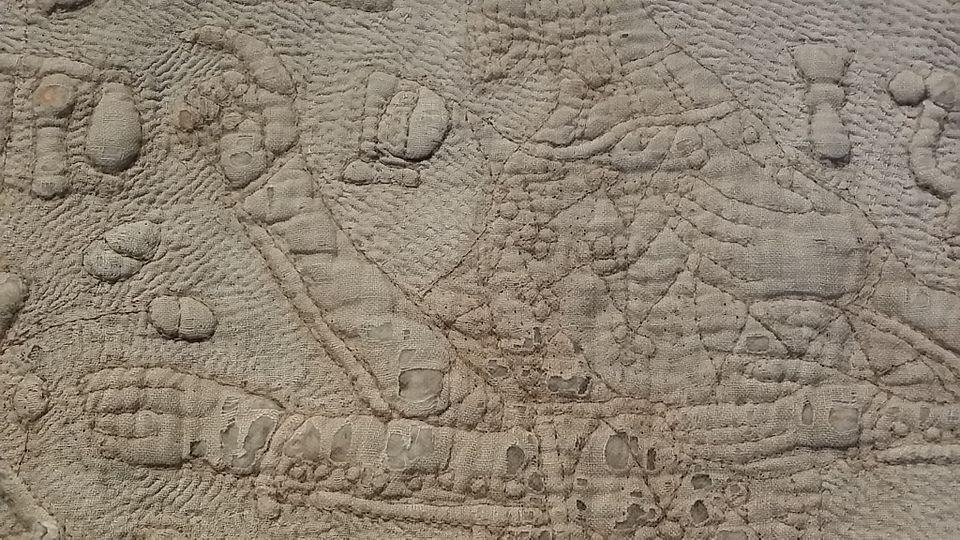
This picture shows the surface wear exposing the wadding beneath the detail of a knight’s hands and arms.
Tristan and Isolde also known as Tristan and Iseult is a story of a medieval romance of chivalry and tragedy of Celtic source in the days of King Arthur.
The tale is about the illicit love and tragedy between the Cornish knight Tristan and the Irish princess Iseult. As the tale goes they fell in love after they accidently drank a Love Potion.
History of Quilting and the Sewing Machine
Bedrooms and Entertaining
Bedrooms In England in the 1600’s and before were used by the more wealthy in a more social fashion. It was common practice to invite people to visit them in their bedrooms.
Quilts and bed hangings became signs of wealth with the middle classes also displaying textiles in their houses. Some would have been bought whilst others would have been made by members or servants of the house.
History of Quilting and the Sewing Machine
Trading Nation
Britain was a trading nation and by the early 1800’s light printed colourful cotton fabrics began to be imported and used for both household and clothing. Dressmaker shops and tailors became a fabric source for patchwork and quilters.
History of Quilting and the Sewing Machine
Transportation Australia
In the 1800’s it was also common practice to send convicted people to Australia. Sometimes for what to us today we would consider minor crime.
The famous case of what became the Tolpuddle Martyrs (Tolpuddle, Dorset, England 1834) and them being recognised as the beginnings of the Trade Union movement is one example of the transport of male convicts.
However unconnected with the Tolpuddle Martyrs women were also transported. It was a long and arduous journey and you had to be tough to survive.
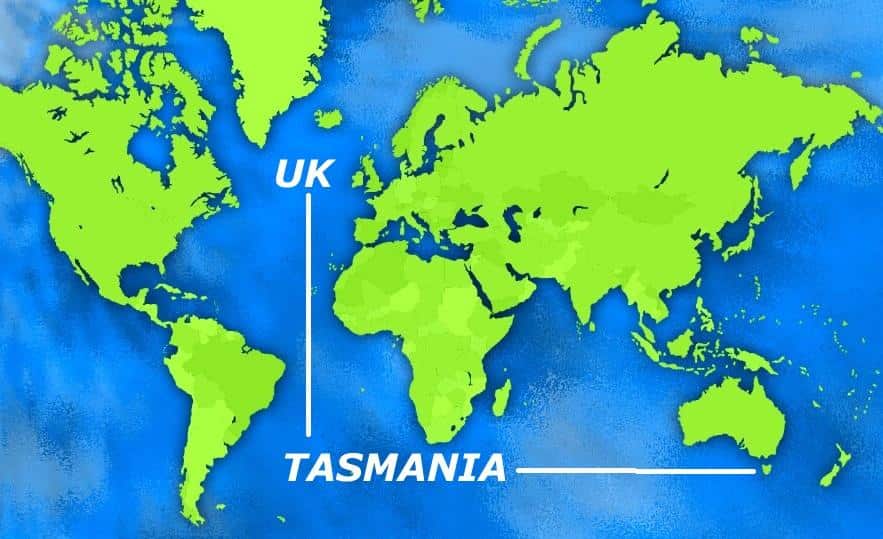
One such penal colony convicts were sent to was Hobart, Tasmania.
History of Quilting and the Sewing Machine
Rajah Quilt
In 1841 approximately 30 convicted women were transported to Tasmania from London, England. Woolwich to be precise.
Whilst in transit they made a quilt. This quilt eventually found its way back to Scotland and in 1989 it was rediscovered.
Considered of such importance to the history of Australia and in memory of those who made such a great contribution to the development of Australia it now hangs in the National Gallery of Australia in the Capital, Canberra.
It is known as the Rajah Quilt and is almost 10 feet square (3×3 metres)
It is a medallion quilt with Broderie Perse at its centre. The quilt contains 2815 separate pieces.
Why is it called the Rajah Quilt you may ask? It is because the ship was named Rajah. HMS Rajah convict ship.
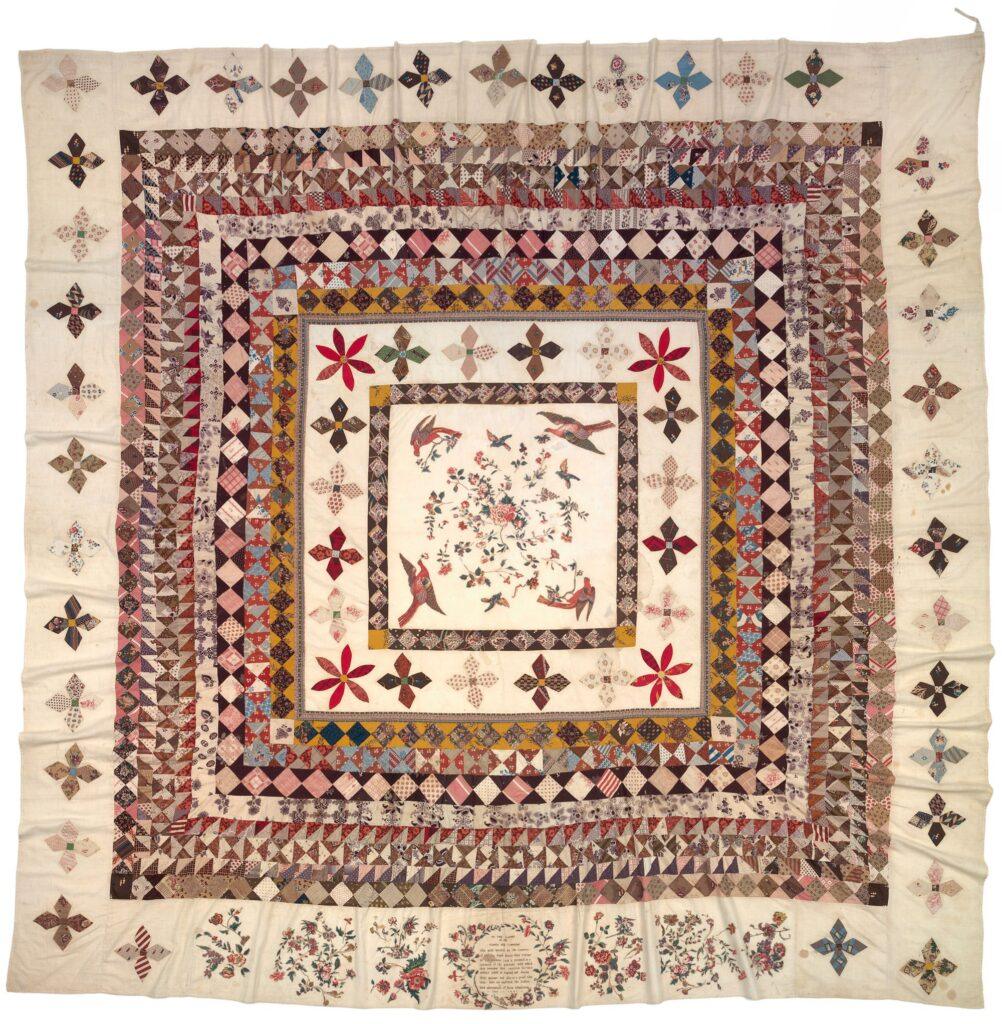
The Rajah quilt 1841 and now in the National Gallery of Australia in Canberra. Competed on the convict ship HMS Rajah.
History of Quilting and the Sewing Machine
Broderie Perse
Broderie Perse – French for “Persian Embroidery”
The Broderie Perse technique has been described as an early form of puzzle piecing.
The term Broderie Perse originated in 1846. It uses printed motifs in a style of applique. These fabric motifs are taken from one fabric and transferred to another acting as a background to create a design or picture.
History of Quilting and the Sewing Machine
The Americas
With the Pilgrim Fathers sailing from Plymouth to America in the 1600’s and those that followed they took with them some of their quilting expertise.
It followed that during the 17th and 18th centuries quilting became popular amongst a few. The interest was mainly amongst the more well to do who had more time on their hands. The quilts they made were decorative and became known as Colonial Quilts.
History of Quilting and the Sewing Machine
Style of the 1800’s
Whole cloth quilts, broderie perse and medallion quilts were the styles of the quilts made during the early 1800’s combined with the use of Appliqué.
History of Quilting and the Sewing Machine
Appliqué
Appliqué – The making of a picture with individual pieces of cloth of any size.
The nearest equivalent example if working with wood, would be Marquetry. The art and craft of applying pieces of veneer to a structure to form decorative patterns or designs.
Appliqué is ornamental needlework in which pieces or patches of fabric in different shapes and patterns are sewn or stuck onto a larger piece to form a picture or pattern.
Below is a Tibetan Appliquéd Silk 18th Century Example
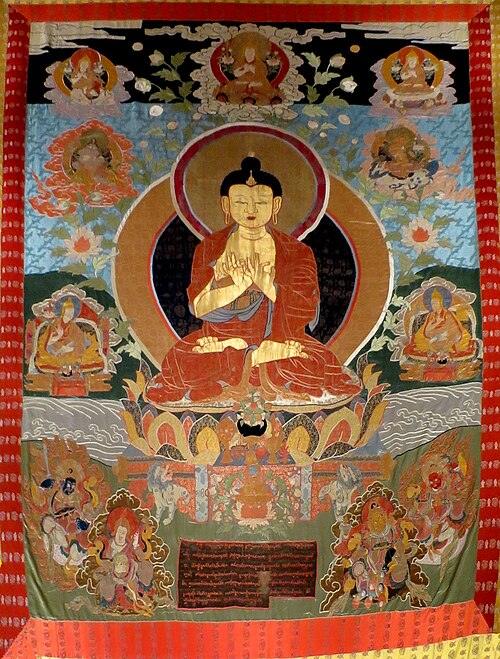
Tibetan Appliquéd Silk 18th Century Example Of Future Buddha Maitreya with Eighth Dalai Lama and Tutor.
Archaeologists have discovered ancient examples of appliquéd leather in Egypt as early as 980 BC.
History of Quilting and the Sewing Machine
Medallion Quilts
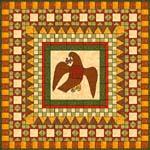
Medallion – Having a centre cloth focus picture or object surrounded by borders to achieve the desired quilt size. The centre picture can be made from scratch.
Medallion quilts are made around a centre. Sometimes around the centre is a solid piece of large-scale fabric like a toile or a Tree of Life, or a large pieced star or an appliqued motif or other pieced pattern.
Medallion Quilt Example
History of Quilting and the Sewing Machine
Block Quilts
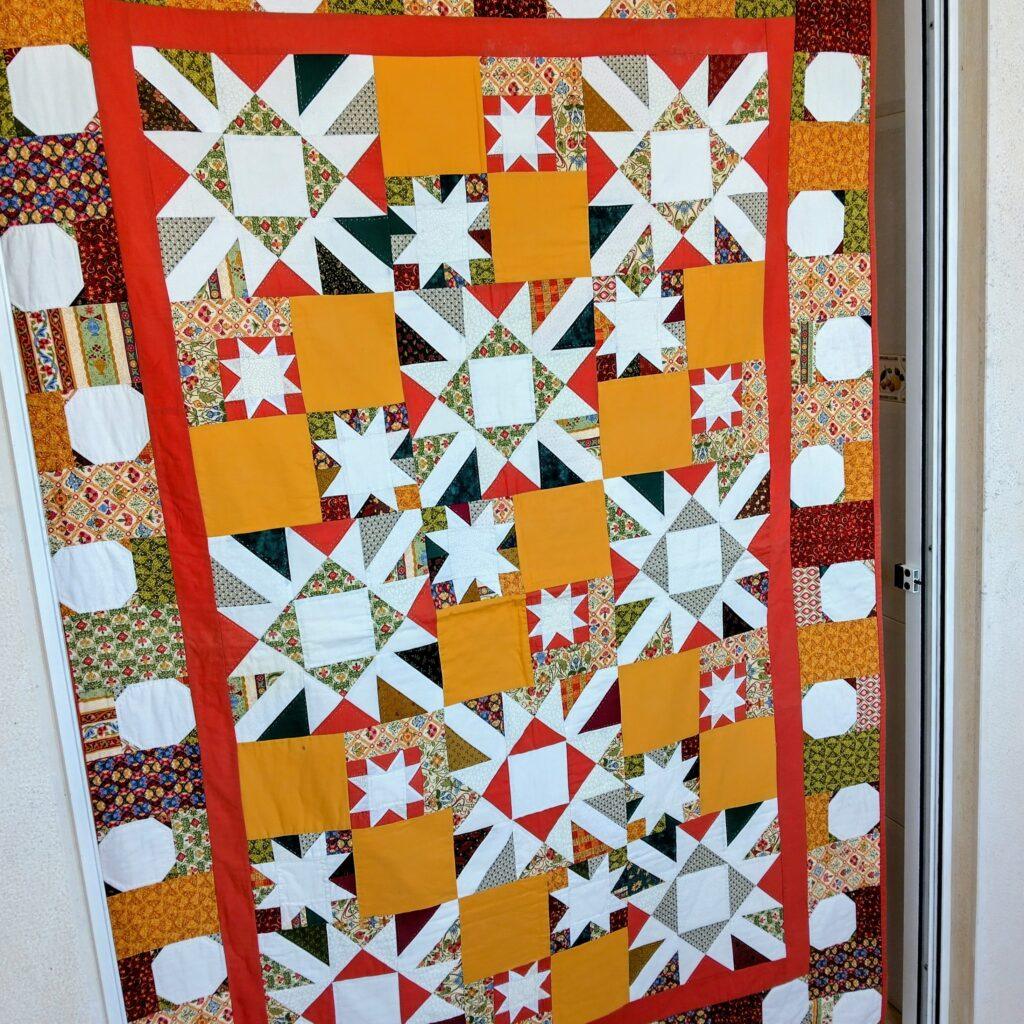
Blocks – Simple different coloured or patterned material (square, rectangle, triangle) of the same or different sizes sewn together. Each block can be plain or with pictures using Appliqué.
From the 1840’s with more printed fabric becoming available the style of making quilts with blocks became more popular.
Some involved a variety of blocks made with different patterns whilst others were a set of identical pieced blocks.
Blocks were sewn together and a border sometimes added.
History of Quilting and the Sewing Machine
Block Quilt Example
History of Quilting and the Sewing Machine
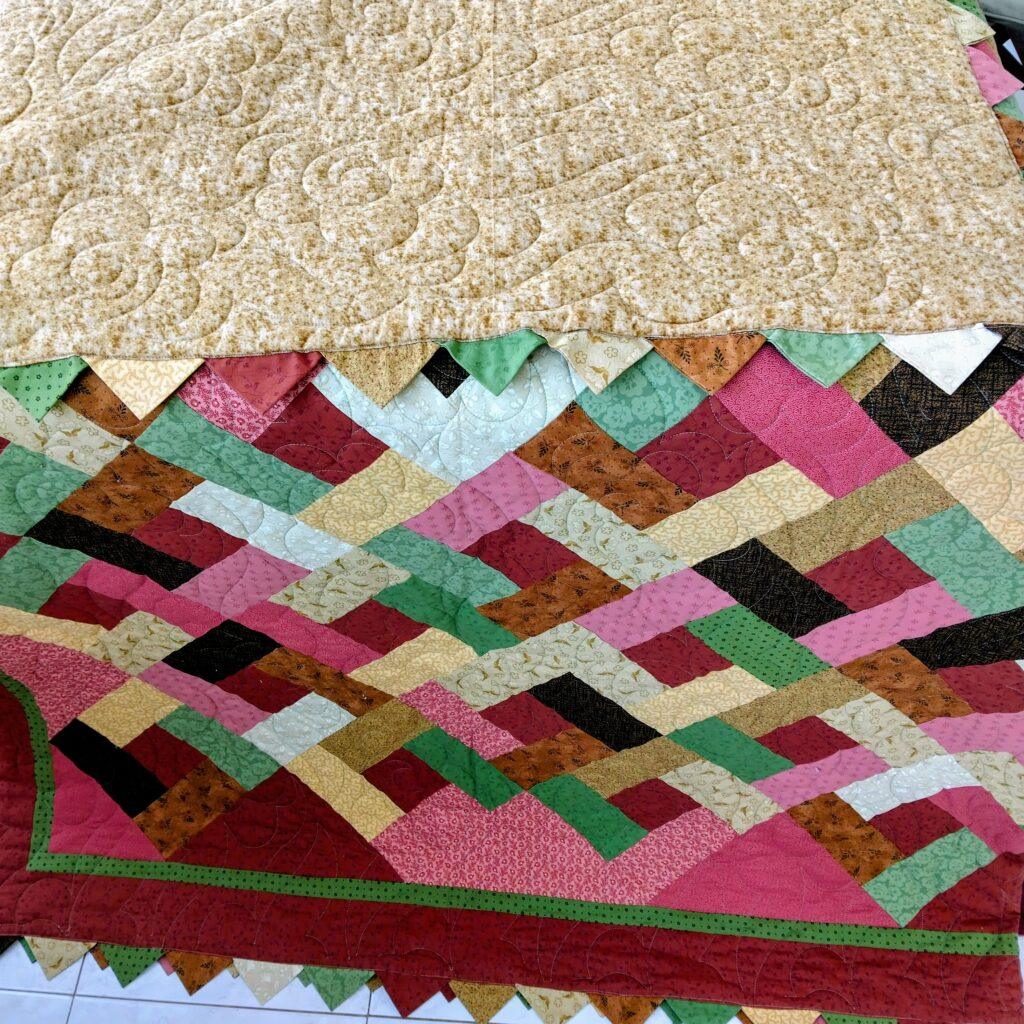
Block Quilt Showing Front and Back Longarm Quilted
Quilts were always hand quilted. Machines are now available with Long Arms to enable them to extend across the quilt.
These are specialist machines so once you locate a machine you will need to discuss beforehand the suitability of it being quilted. For example thickness. You choose a pattern and a card or code is simply entered into the machine.
Below is an example of a fully hand made block quilt showing back and front that has been professionally quilted with a Longarm Quilting Machine.
History of Quilting and the Sewing Machine
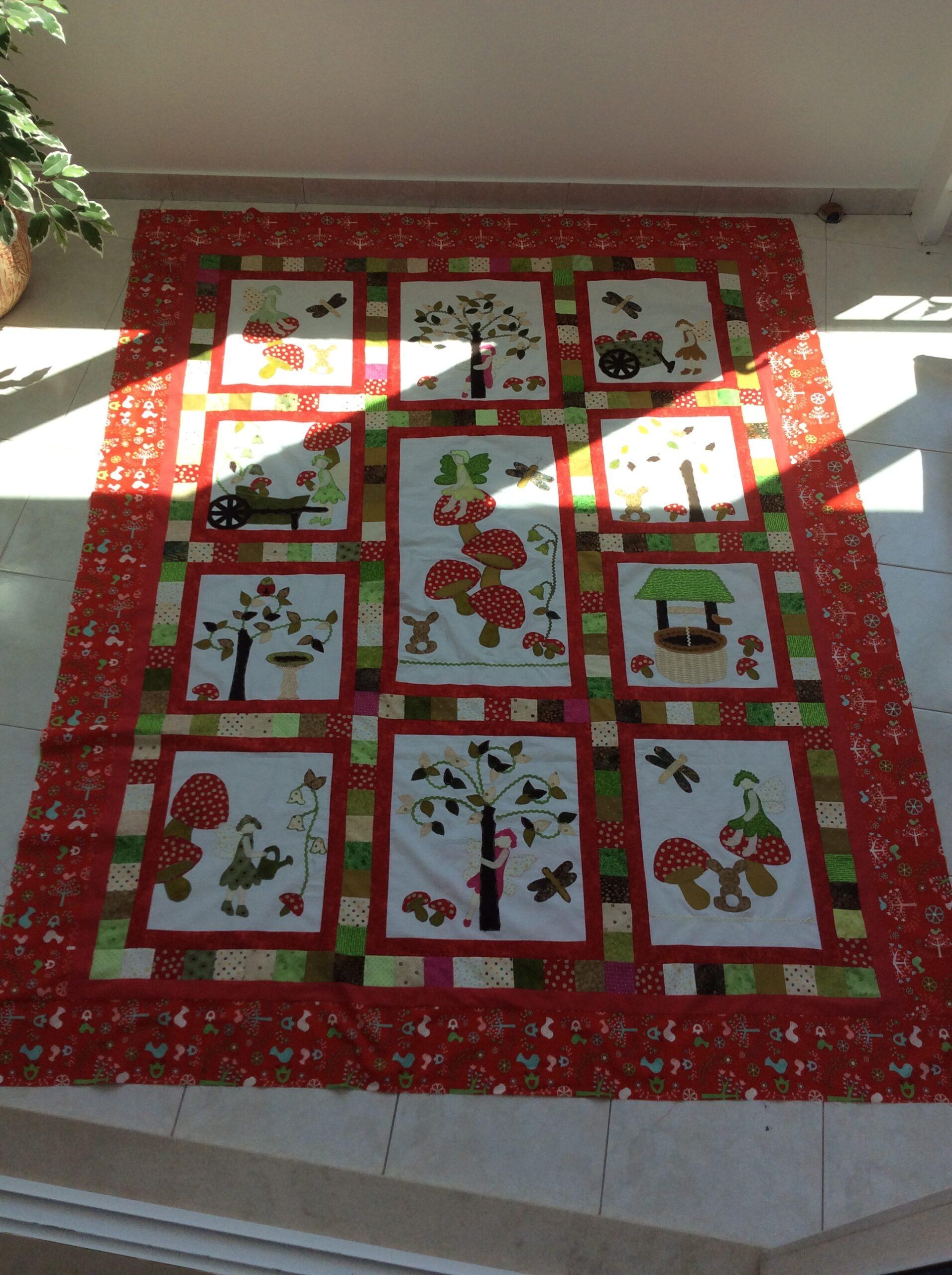
Combined Block and Appliqué Quilt Example
In this example it shows a Block Quilt with each of the blocks having a separate picture using Appliqué.
History of Quilting and the Sewing Machine
The 10 Year Inspirational Quilt
Making a quilt single handed can be a mammoth task and on many occasions quilters will do other quilting projects to add variety to their hobby.
Doing any big task, not just quilting can be overwhelming.
The quilt below has been named by me The Inspirational Quilt. It has been made by Kim M and was started in 2016 and finished in 2026. Kim has been making this quilt on and off whilst other things and life got in the way for 10 whole years.
The quilt is magnificent and the picture does not do it justice.
Why named The Inspirational Quilt? Simply because its completion denotes hard work, dedication and a positive never give up attitude. Inspirational because anyone reading this with a positive attitude can be inspired to complete that task, whatever it is, they started and never finished yet. Just keep going!
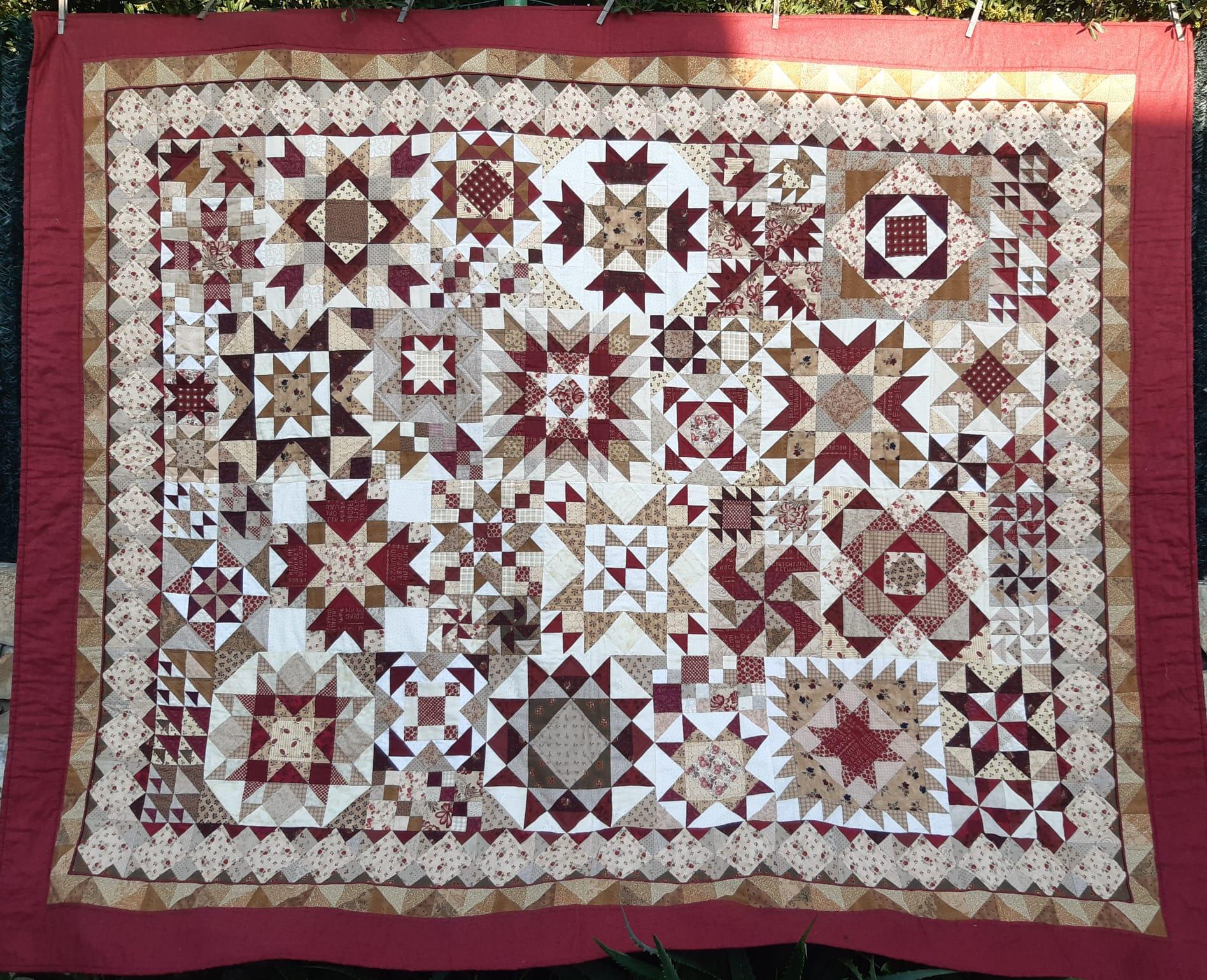
The Inspirational Quilt. This Magnificent Quilt Took 10 years To Complete And Is An Example And Inspiration To Everyone To Finish Any Project They Started Irrespective Of How Long It Takes!
History of Quilting and the Sewing Machine
Wholecloth Quilts
Wholecloth Quilts are made by using one solid piece of fabric such as a cotton sheet as the top instead of being pieced with separate individual blocks.
You can then get them printed with a stencil in a design you want or you stencil it yourself in your own design. Providing you use the correct stencil pen specifically for material the stencil lines wash out when the quilt is finished.
This type of quilt is not recommended unless you really want to do it. It is just too big a job for most people. It also lacks the variety of working on numerous other smaller projects unless you multitask.
Wales, Northern England and the Scottish Borders is where Wholecloth Quilting originated and was very popular in the 19th and 20th century.
Regional designs developed in Wales and the regions of Northern England and the Scottish Borders. Identification of the region of where a quilt was made could be established with more or less certainty by the design.
History of Quilting and the Sewing Machine
Quilting Clubs
Interest in quilting was a predominantly female pursuit. With interest developing and fabrics becoming more readily available there were conversations between like minded women.
Soon clubs started to form either on a formal or informal basis. This gathering of like minded women was a way of meeting people. Not only as a social gathering but also to learn from each other.
This still goes on today. Today there are many quilting clubs of various types. Some purely commercial with little atmosphere and sometimes little learning. Whilst others are less formal and meet in each others homes. Yet again they vary with some being more friendly than others. Some with members going on holidays together.
The essential thing with any such group is keeping it small and friendly.
Very often the question asked by existing group members is ‘Can I be friends with this potential new member? Will they fit in?’
Sometimes the groups will have light hearted names such as ‘Stitch and Bitch’ or ‘Monday Munchers’.
History of Quilting and the Sewing Machine
Cotton and Fabrics
For quilting and patchwork when you see references to fabric it is Cotton that is being referred to. Not Cotton mixed with man made fibres. Only 100% Cotton will do.
History of Quilting and the Sewing Machine
Quilting Exhibitions
Today there are also many exhibitions within a country or around the world that one can attend.
One such huge exhibition that is normally held every year is that of The Festival of Quilts at the National Exhibition Centre in Birmingham, UK.
It is Europe’s largest quilting event. Normally held in July or August it has exhibits from all over the world together with numerous trade stalls.
Quilters can exhibit and display their quilts in different categories.
The exhibition has altogether in the region of 47 different categories of prizes to cater for different styles of quilt and skill levels.
If you attend as a none quilter there are two things that will stand out to you.
The quality and detail of the quilts. The second, and this really can surprise you, is the the number of men who are quilters.
However this should not be of surprise. Over the years no women have been attributed to the design or invention of the sewing machine although they may have contributed greatly.
So did the male inventors do it because of an interest in quilting and sewing or because of the potential business opportunity???
History of Quilting and the Sewing Machine
USA Prison Changing Lives
Here is a superb example of male interest in quilting and sewing.
The South Central Correctional Center is a maximum security prison south of St. Louis. There they hold prisoners which include those jailed for murder.
The prison has Restorative Justice Organization (RJO), a program that allows those taking part away from their cells.
As a result one group of prisoners spend 40 hours a week making birthday quilts for foster children and kids with disabilities.
The men’s commitment to the craft of quilting is total—they choose patterns, debate colour combinations and finish the project.
Some of the group may never be released but have found a way to make a positive contribution to society.
It is an amazing story of the power of craft to change lives and has been the subject of a television documentary.
History of Quilting and the Sewing Machine
Sewing Machines
If you were to ask people who invented the Sewing machine most would probably say Singer. However they would be wrong.
What Singer did do was to make the sewing machine available to the masses.
In 1856 the Singer Sewing Machine company in America started a credit plan allowing the purchase of their sewing machine by installments. This allowed many homes to purchase and by 1870 there were many Singer Sewing Machines in many homes.
One of the traditional roles of women was dress making and making clothes for the family and this meant that they could make them in much less time. It meant it leaving more time for making all or part of their quilts.
You guys out there today will realise how things have changed and that is much quicker to sew your own buttons on!!!!
History of Quilting and the Sewing Machine
Canada
If on a visit to Canada to a place called St.Jacobs in Ontario you will discover that it has two museums. At least it did in 2005, one a Maple Syrup museum and the other a Quilting museum. This quilting museum was a live in action museum with members of the Mennonite Community making quilts.
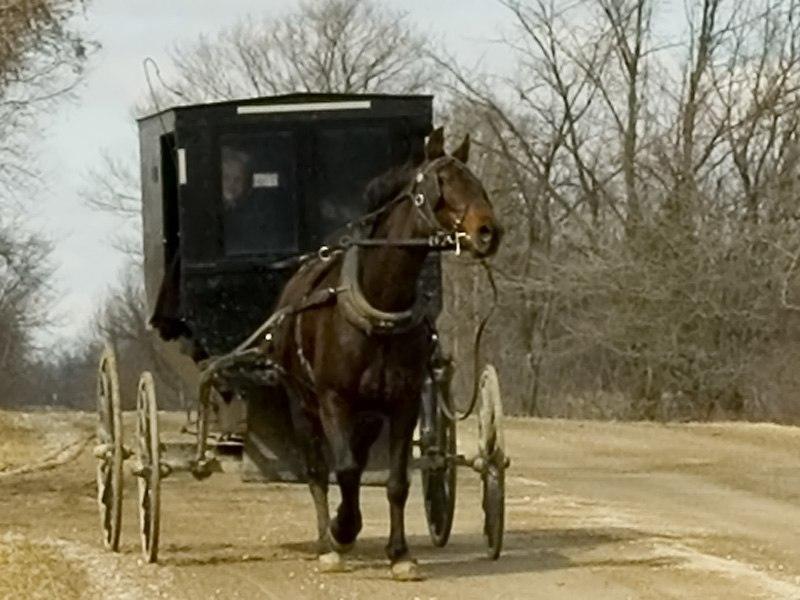
Old Order Mennonite Carriage Similar To Those That Can Still Be Seen In Use Today. Credit Alan Walker – Own work, CC BY-SA 2.5,
History of Quilting and the Sewing Machine
None Quilter Perspective
For those who are none quilters, and that includes me, there are two things that I have learned over the years.
One is the extraordinary amount of time, detail, thought and dedication it takes to make a quilt or anything in pursuit of the hobby. As a result quilters have my utmost respect and praise.
Second. Every quilt made by a quilter is unique with not another exactly like it anywhere in the world.
However if thinking of making and selling a quilt there is absolutely no way, not the remotest chance, of asking and getting the real cost of the hours, thought and dedication in making it.
The nearest I have seen in terms of real money was in the Quilting Museum in St Jacobs in 2005 when there was a quilt on sale for 10,800 CDN Dollars. Knowing what I know now this could not possibly represent its real cost.
History of Quilting and the Sewing Machine
Amish
Another Sect highly regarded for their work and skill making quilts is the Amish Community. They are known for bold graphic designs, distinctive colour combinations and the quality of their stitching.
Over 250 years ago the Anabaptist Amish sect after emigrating to the United States and Canada from Germany and Switzerland became well known for the quality of their quilts.
Dating from 1849 Amish quilts were whole-cloth works in solid colours. In the 1870s pattern-pieced bed coverings started to appear.
Amish religion discourages individual expression. However quilt making has allowed Amish women to express their creative natures without giving offence.
The Amish culture is to encourage activities that promote community and family closeness.
Specific Amish communities tend to be identified with particular patterns and fabrics.
For the women of the community a fundamental part of social life was and is quilting.
Quilts are made to celebrate special occasions such as birthdays, weddings, raising funds for the community or church.
Since the 1960s when Amish quilts were recognised for their quality many have been sold and provide a source of income. Indeed all around the world Amish quilts have become collectors’ items.
History of Quilting and the Sewing Machine
The Invention Of The Sewing Machine
Going back in history to the time of the invention of the sewing machine.
Imagine. No internet, No mobile phone, just the old fashioned situation of having a problem, sitting down, thinking it through and coming up with a solution. What clever people they were!
History of Quilting and the Sewing Machine
1755 Charles Fredrick Wiesenthal
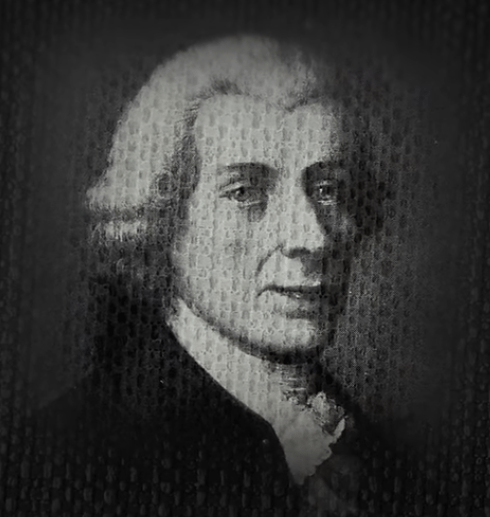
Charles Fredrick Wiesenthal (1726–1789).
Starting with Charles Fredrick Wiesenthal in 1755.
In 1755 the first British patent for a mechanical device to aid the art of sewing was issued. It consisted of a double pointed needle with an eye at one end.
It was awarded to a German born engineer working in England by the name of Charles Fredrick Wiesenthal (1726–1789).
‘His sewing machine used the chain stitch method, in which the machine uses a single thread to make simple stitches in the fabric. A stitching awl would have pierced the material, and a forked-point rod would have carried the thread through the hole, where it would have been hooked underneath and moved to the next stitching place, after which the cycle would be repeated, thereby locking the stitch in place.’
(Extract courtesy of Wikipedia)
History of Quilting and the Sewing Machine
1790 Thomas Saint
Thomas Saint is the person generally accredited with the invention of what was to become the modern day sewing machine.
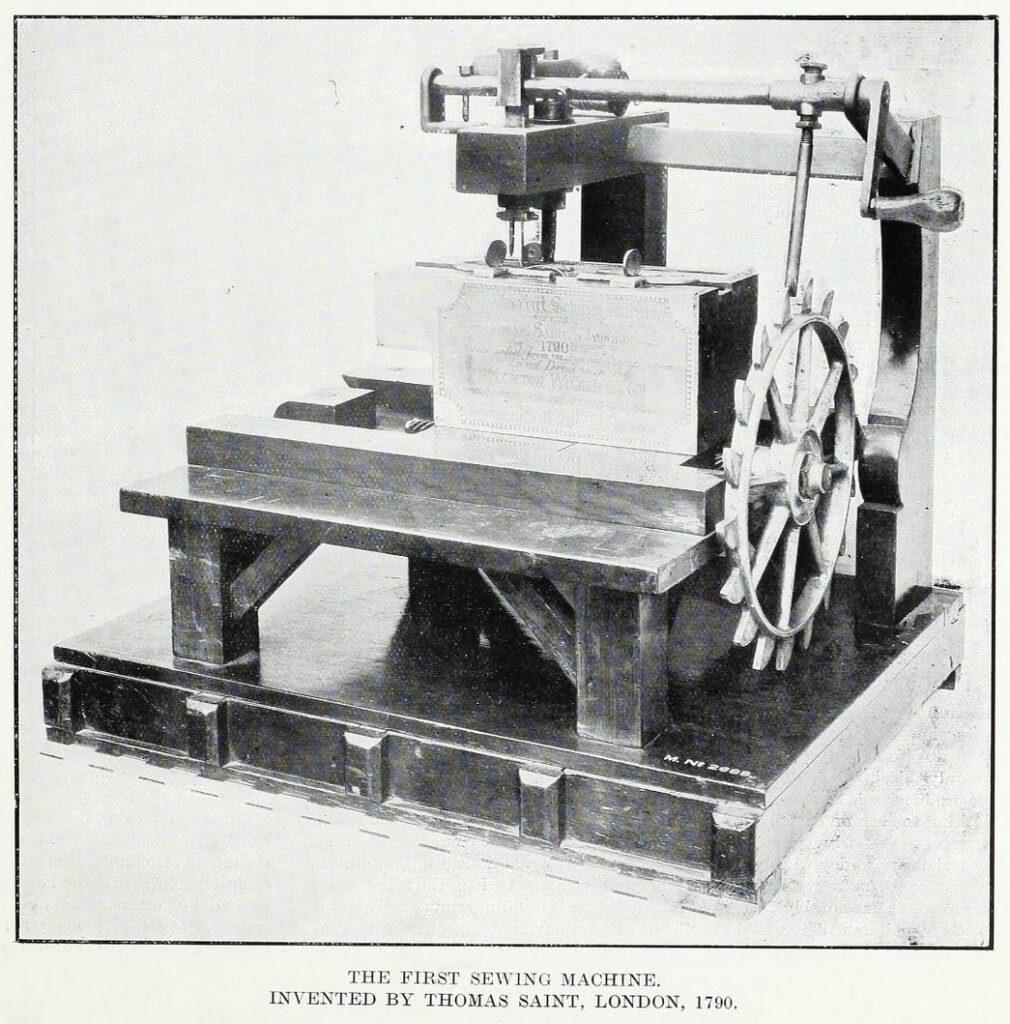
Thomas Saint was a skilled cabinet maker and designed it for use on leather and canvas material. The purpose being to reduce the amount of hand stitching on garments and improve the consistency and quality. There is no surviving evidence of his machine which had a feed mechanism suitable for short lengths of leather. In addition there was an overhanging arm, a vertical needle bar and a looper.
Thomas Saint’s chain stitch used on the first ever complete sewing machine design for leather work. An awl preceded the eye pointed needle to make a hole in preparation for the thread
The design by Thomas Saint was very advanced for the age but the focus and purpose was for leather saddles and bridles. Sailing ships were the sea transport of the day and the machine was also used for sewing the canvas of ship sails.
Although of good design it would take many decades to bring it to the sophisticated machine of today.
History of Quilting and the Sewing Machine
1804 England – Thomas Stone & James Henderson
Thomas Stone and James Henderson built a sewing machine.
The machine was designed to simulate the motion of hand sewing by using a pair of pincers to pass a needle back and forth through fabric thus mimicking human fingers. It was an early attempt at mechanizing sewing but the design was not practical or efficient and required frequent stops to replace short lengths of thread.
History of Quilting and the Sewing Machine
1804 Scotland – John Duncan
John Duncan made an embroidering machine.
John Duncan came from Glasgow and wrote numerous articles about weaving. He also wrote the ‘Practical and Descriptive Essays on the Art of Weaving’ (Glasgow, 1808)
He was the inventor of an early sewing machine known as a ‘tambouring machine’. This is used for raising flowers, figures and other ornaments on muslins, lawns, silks, woollens, or mixed cloths.
Duncan patterned the machine and may have used the chain stitch. The chain stitch is used for tambour lace and was later used by Barthélemy Thimonnier.
The first embroidering machine is how Duncan’s invention has been described and may have used a number of needles. However this early pioneering invention was unsuccessful.
History of Quilting and the Sewing Machine
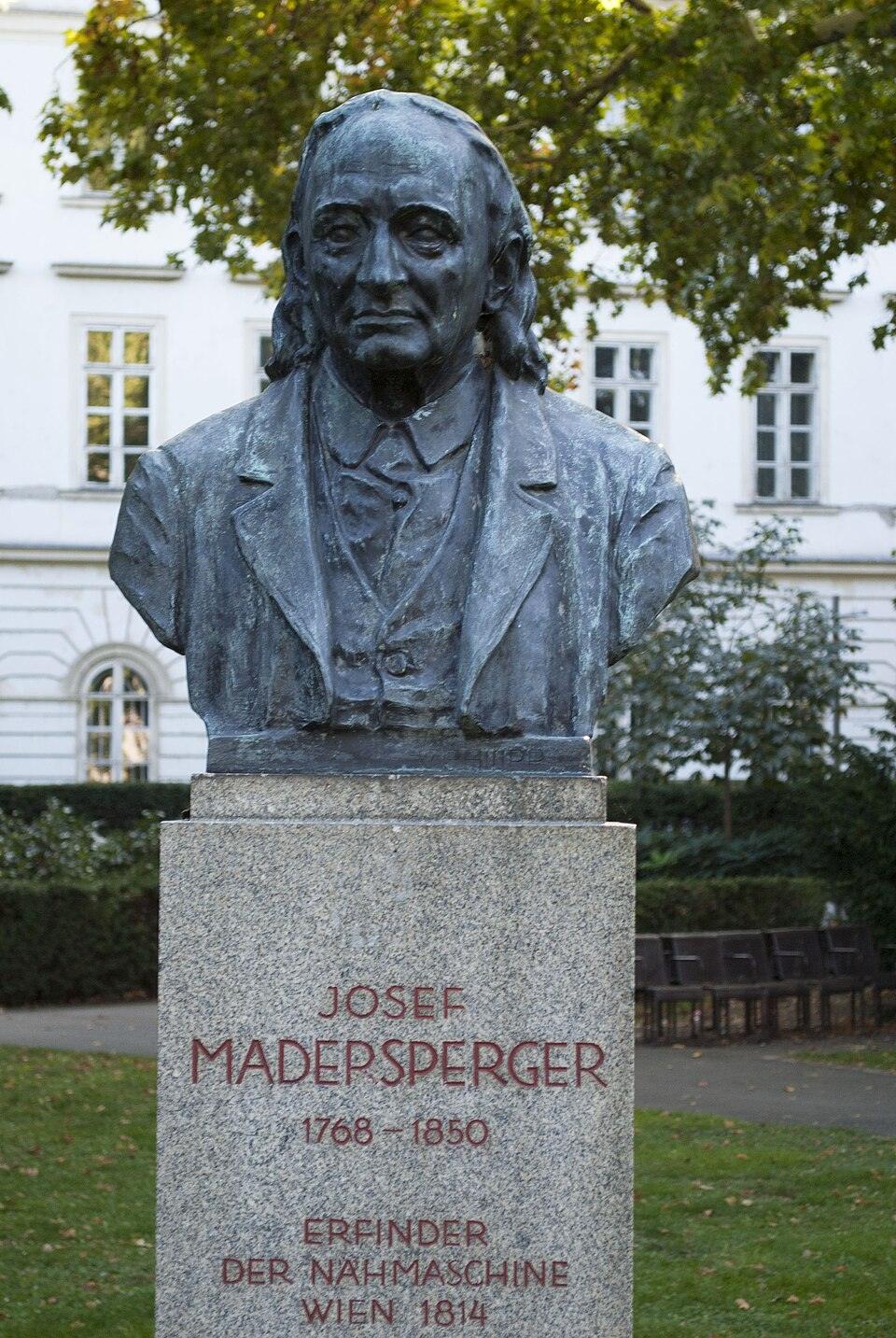
1807 Austria – Josef Madersperger
Josef Madersperger, an Austrian tailor started to build and experiment with his first sewing machine.
History of Quilting and the Sewing Machine
1810 Germany – Balthasar Krems
Balthasar Krems (07 Nov.1760-04 May1813) in about 1810 is said to have developed a machine for sewing caps. However no patent was ever taken out.
Krems was a stocking weaver by trade and this was the first time a machine had been developed for a specific purpose.
History of Quilting and the Sewing Machine
1814 Austrian Government Support
In 1814 Josef Madersperger made public his first working sewing machine. As a result he received financial support from the Austrian Government to further develop the machine.
History of Quilting and the Sewing Machine
1839 Austria Weaving Chain Stitch
In 1839 Josef Madersperger built a machine imitating the weaving process using the chain stitch.
History of Quilting and the Sewing Machine
1829 France – Barthélemy Thimonnier
A French tailor, Barthélemy Thimonnier, invented the first practical and widely used sewing machine. Just like the machine built by Thomas Saint it used a chain stitch and sewed seams that were straight.
Barthelemy Thimonnier (1793-1857)
History of Quilting and the Sewing Machine
1830 France – Patent Submission
Barthélemy Thimonnier signed a contract with Auguste Ferrand, a mining engineer who made the required drawings and submitted a patent application.
The patent for the sewing machine was issued on 17 July 1830.
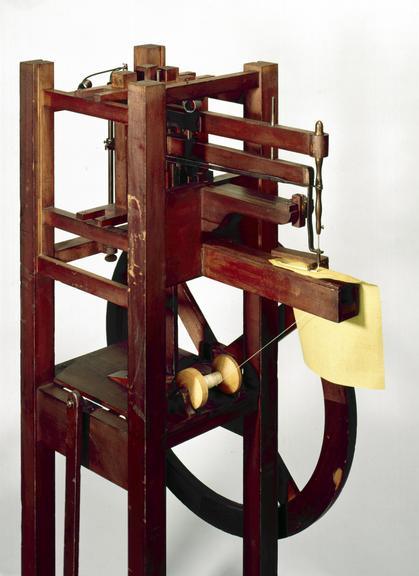
Chain Sewing (Copy) Machine Invented By Barthelemy Thimonnier 1830
History of Quilting and the Sewing Machine
1830 France World First Factory
The first machine based clothing manufacturing company in the world was opened by Barthélemy Thimonnier and his associates.
This was to make uniforms for the French Army. The factory did not last long and following the issue of the patent was destroyed by fire believed by workers fearful of losing their livelihood.
The Science Museum in London has a model of the machine. It is made of wood and uses a barbed needle which passes downward through the cloth to grab the thread and pull it up to form a loop to be locked by the next loop.
History of Quilting and the Sewing Machine
1832 Walter Hunt
Walter Hunt invented the first American lockstitch sewing machine.
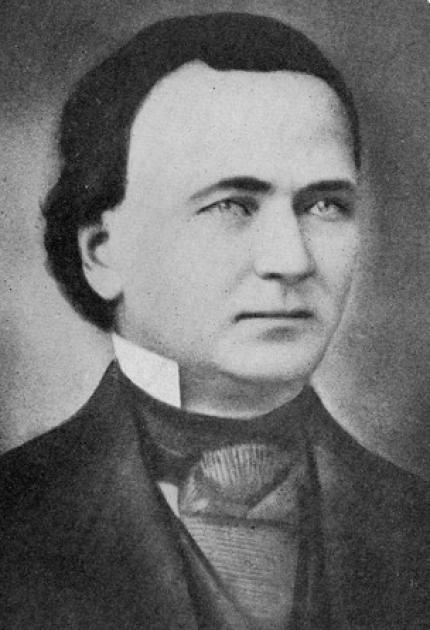
Walter Hunt 29.07.1796 Martinsburg, New York, U.S.
Died 08.06.1859 (aged 62)
…’machine used a needle with the eye and the point on the same end carrying the upper thread, and a falling shuttle carrying the lower thread. The curved needle moved through the fabric horizontally, leaving the loop as it withdrew. The shuttle passed through the loop, interlocking the thread. The feed was unreliable, requiring the machine to be stopped frequently and reset up……’
He appears to have given up on further development but did go onto to sell individual machines. However he did not patent them until 1854.
History of Quilting and the Sewing Machine
1841 Newton and Archibold
The eye pointed needle and the use of two pressing surfaces to keep the pieces of fabric in position were introduced to Britain by partners Newton and Archibold.
History of Quilting and the Sewing Machine
1842 USA John Greenough
The first sewing machine in the United States was patented by John Greenough
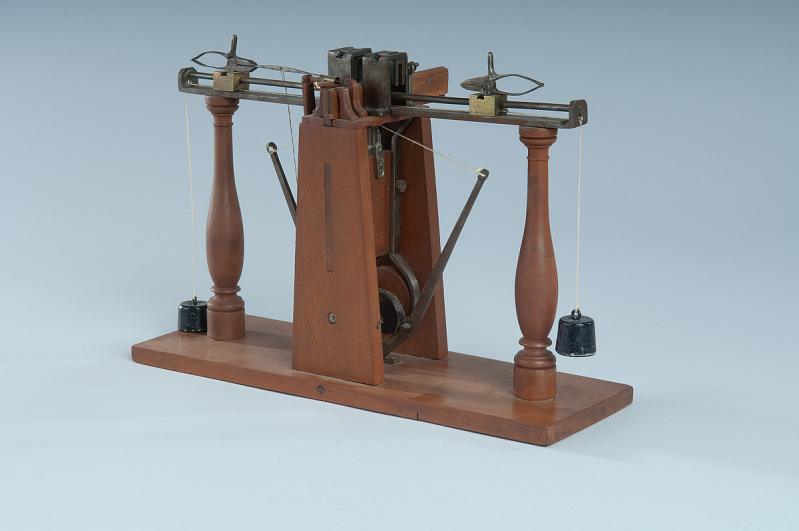
John-Greenough-1842-First-Patent-USA-Sewing-Machine
History of Quilting and the Sewing Machine
1844 England John Fisher
English inventor John Fisher put together all that had been learnt over the previous 50 years to bring what is recognisable as the first modern day machine.
However John Fisher filed a patent that was in effect a botched application.
History of Quilting and the Sewing Machine
1845 USA Elias Howe
Elias Howe was an American born in Spencer, Massachusetts. In 1845 he built a similar machine and took out a patent.
It was only the fourth US patent for a sewing machine and was taken out on 10 September 1846 at Cambridge, Massachusetts.
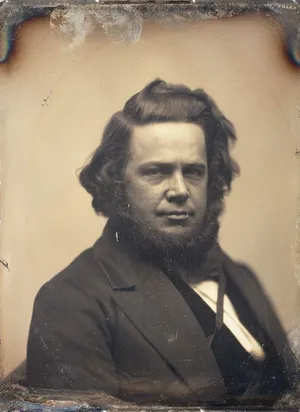
Elias Howe Jr. (9th July 1819–3 October 1867) Creator of the Modern Lockstitch Sewing Machine.
His sewing machine was similar to the one invented by John Fisher. The difference was that the fabric was held vertically. Also an important improvement on his machine was to have the needle running away from the point, starting from the eye.
Howe’s machine was a lockstitch machine giving it a stronger and more reliable seam. It used two threads, one from a top spool and another from a bobbin below. This created a perfect interlocking stitch on the fabric and this design significantly improved the quality and durability of machine-sewn garments.
However the machine was complex to operate as well as being expensive. It also lacked the everyday user friendly features people needed.
Elias Howe subsequently travelled to England to try and promote his machine. Staying a considerable time on his return to the USA he found a number of people infringing his patent.
History of Quilting and the Sewing Machine
1851 USA Isaac Merritt Singer
Isaac Merritt Singer also built a very similar machine in 1851. He filed a patent and in legal terms his was accepted over and above that of John Fisher so denying John Fisher the credit that was rightly his. Singer went on to benefit greatly from the patent.
Isaac Merritt Singer was an engineer and came from Boston Massachusetts. It was there that he saw in a shop a rotary sewing machine being repaired.
He replaced the rotary shuttle with a falling shuttle, the needle was mounted vertically and included a presser foot to hold the cloth in place.
The foot treadle is used to convert reciprocating to rotary motion and been in use since the Middle Ages. Adapting it for use to drive the sewing machine meant leaving both hands free. Singer was granted an American patent in 1851.
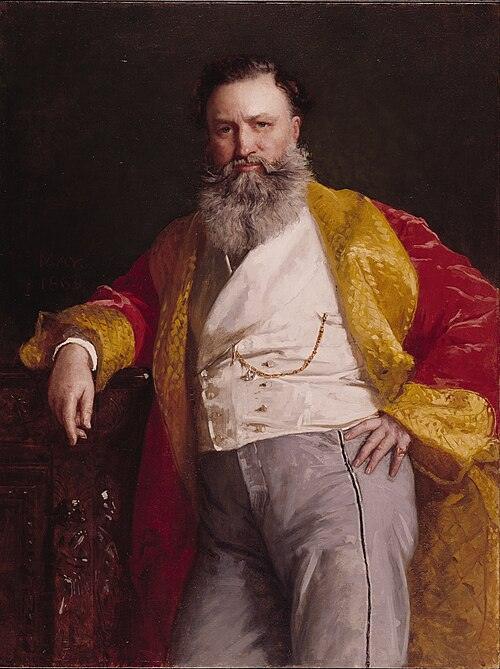
Isaac Merritt Singer B New York USA 27th October, 1811 D Paignton, Devon, England 23rd July, 1875 (aged 63)
It has been said that Singer did not actually invent anything. That he was a womaniser, bigamist, had illegitimate children and that he was sent to England to avoid embarrassment to his family.
On death he divided his $13 million fortune unequally among 20 of his living children by his wives and various mistresses, although one son, who had supported his mother in her divorce case against Singer, received only $500. Altogether, he fathered 26 children by five different women.
Also amongst his achievements was his headquarters in New York. It was the tallest building in the world at that time.
What Singer did was to combine the ideas of Thimonnier, Hunt and Howe.
What Singer was able to do was to put a plan together to successfully sell sewing machines like no else had ever done.
History of Quilting and the Sewing Machine
1854 Patent Infringement
Elias Howe on his return to the United States found that one of the number of people infringing his patent was Isaac Merritt Singer.
Knowingly or unknowingly Isaac Merritt Singer had infringed the ideas and patent of Elias Howe whilst Howe was away in England.
By 1854 Howe had won a case for patent infringement and was awarded the right to claim royalties from the manufacturers who were using his ideas covered by his patent.
Singer was forced to pay a lump sum in compensation for all machines already produced.
However he also came to an agreement with Elias Howe by taking out a license under Howe’s patent and Singer paying Howe US$1.15 per machine.
History of Quilting and the Sewing Machine
Hire Purchase
Despite things said about Isaac Merritt Singer he was a very clever man and business savvy because he then entered into a joint partnership with a lawyer named Edward Clark. Between them they created the first hire-purchase arrangement to allow people to purchase their machines through payments over time.
What Singer did allowed many more people to have sewing machines and more importantly, Singer Sewing Machines, thereby increasing his business.
What Singer did was ground breaking.
It became the first public modern day display and basis of trust around the world with bank managers, businesses and industries where individuals trusted individuals to pay for goods, services and loans. This long before regulation and inflexible and uncaring computer applications.
History of Quilting and the Sewing Machine
Allen B. Wilson
An improvement over the Singer and Howe machines was developed by Allen Benjamin Wilson (October 18, 1823 – April 29, 1888) with a shuttle that reciprocated in a short arc.
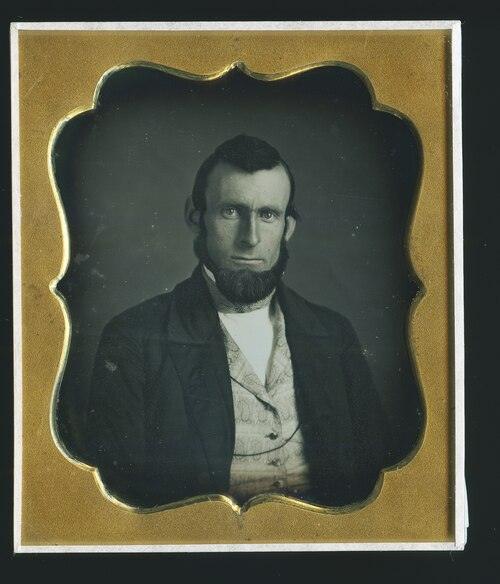
Allen Benjamin Wilson (October 18, 1823 – April 29, 1888)
Allen B. Wilson also invented the four-motion feed mechanism that is still used on every sewing machine today.
This had a forward, down, back and up motion, which drew the cloth through in an even and smooth motion.
History of Quilting and the Sewing Machine
John Bradshaw
However, John Bradshaw had patented a similar device and threatened to sue Wilson.
History of Quilting and the Sewing Machine
Nathaniel Wheeler
As a result Allen B. Wilson went into partnership with Nathaniel Wheeler to produce a machine replacing the shuttle with a rotary hook. This was far quieter and smoother than other methods.
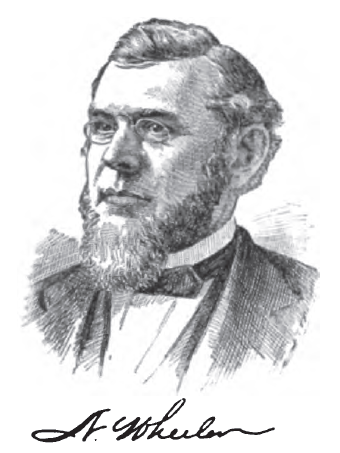
Nathaniel Wheeler b. Connecticut 07.09.1820-31.12.1893
History of Quilting and the Sewing Machine
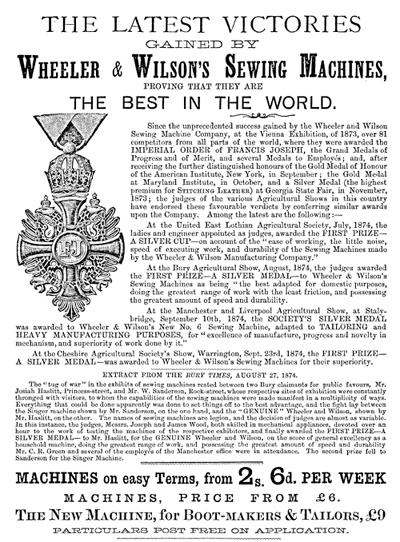
Wheeler & Wilson Company
With this innovation replacing the shuttle with a rotary hook the Wheeler & Wilson Company then went on to produce more machines in the 1850s and 1860s than any other manufacturer.
History of Quilting and the Sewing Machine
1852 Charles Miller
The first machine to stitch buttonholes was patented by Charles Miller of St. Louis, Missouri.
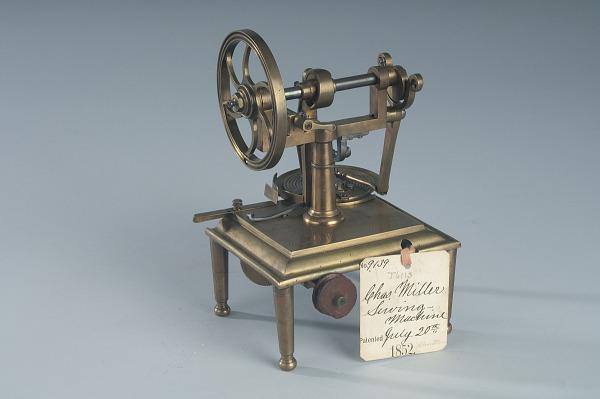
Charles Miller Patent Issued July 20, 1852
History of Quilting and the Sewing Machine
1874 England – William Newton Wilson
William Newton Wilson a sewing machine manufacturer found in the UK Patent Office the drawings of Thomas Saint. He adjusted the looper and built a working machine. This machine is presently owned and displayed in the Science Museum in London.
William Newton Wilson 1827-1894 was born in Manchester (then Lancashire and now Greater Manchester) and the son of William Wilson a cotton spinning mill owner.
In later years, having the same name as his father and maybe to avoid confusion, William Newton Wilson started to refer to himself as Newton Wilson.
Originally he worked for his father, presumably with a view to taking over the business. However he left in1854 after 12 years to start his own engineering workshop in Manchester.
He then went onto open in 1857 his first London shop where amongst other things one of the items he sold was a Boudoir make sewing machine which he imported from America.
History of Quilting and the Sewing Machine
First British Built Sewing Machines
Graham Forsdyke in his article on William Newton Wilson for the International Sewing Machine Collectors’ Society tells us that it is generally accepted that the first sewing machines to be built in Britain were the British and the Lancashire models.
These were commissioned by American Charles Tiot Judkins (1822-1864) who owned the UK rights to the relevant patent and which he registered in 1852. Judkins having bought the UK rights from American Edward Joseph Hughes.
Graham tells us that ‘previous research has indicated that Judkins first approached Manchester engineers Platt Brothers who agreed to make up a batch of the heavy Singer No. 1-like machines.’
However due to a strike and lockout at Platt Brothers Judkins approached two of the Platt Workers John Carver and George Bradbury.
Both Carver and Bradbury were setting up their own business and agreed to production.
John Carver and George Bradbury could therefore rightly claim to be the first manufacturers of sewing machines in the UK.
To support this claim there are two sewing machines at the Clydebank Museum in Glasgow UK. Caste on the underside is one with the name Carver and the other Bradbury.
However it is said that there is a twist to the story.
William Newton Wilson started to write a history of the sewing machine which he never finished.
In this unfinished history there is a claim that Bradbury could not manufacture the required and promised number of machines.
As a result Judkins had William Newton Wilson manufacture them so enabling Wilson to be able claim that he was the first real manufacturer of sewing machines in the UK.
History of Quilting and the Sewing Machine
Multiple Company Formations
In the 1850’s company after company were being formed. Each taking out patents and each trying to sue the others for patent infringement.
History of Quilting and the Sewing Machine
Sewing Machine War – Patent Thicket
These patent applications triggered a backlog of patents in what is known as a patent thicket. The whole process became known as the Sewing Machine War.
History of Quilting and the Sewing Machine
1856 Sewing Machine Combination
To try to put an end to this Sewing Machine War the Sewing Machine Combination was formed in 1856.
Members were Singer, Howe, Wheeler & Wilson, Grover & Baker.
History of Quilting and the Sewing Machine
Pooling Patents
All four companies pooled their patents with the last patent expiring in 1877.
What it meant was that all other manufacturers had to obtain a license for $15 per machine for the duration of the lifetime of the patents.
History of Quilting and the Sewing Machine
1857 James Edward Allen Gibbs (1829–1902)
The first chain stitch single-thread sewing machine was patented on June 2, 1857 by a farmer James Edward Allen Gibbs from Raphine in Rockbridge County, Virginia, USA.
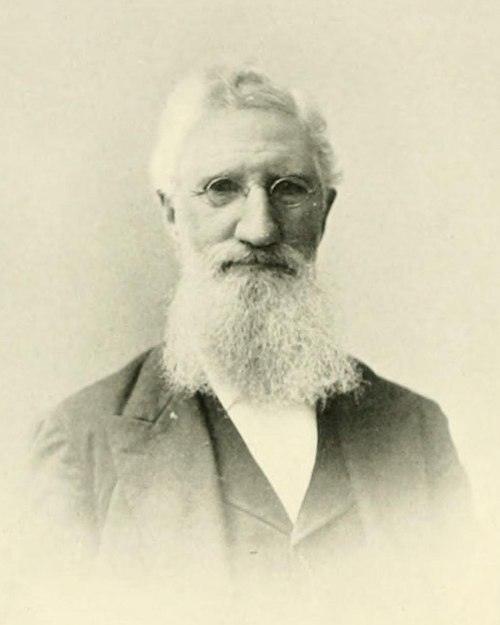
James Edward Allen Gibbs (1829–1902)
History of Quilting and the Sewing Machine
Willcox & Gibbs
Gibbs joined forces in partnership with James Willcox and together formed the Willcox & Gibbs Sewing Machine Company of which Gibbs was principal partner.
Willcox & Gibbs commercial sewing machines are still used today and you can still get spare parts for them.
History of Quilting and the Sewing Machine
1859 William Jones
In 1859 sewing machines started to be made by William Jones.
History of Quilting and the Sewing Machine
1860 Chadwick & Jones
A year later in 1860 Thomas Chadwick and William Jones went into partnership.
It was known as Chadwick & Jones and they started manufacturing sewing machines at Ashton-under-Lyne, England. They manufactured under license machines designed by Howe and Wilson.
Manufacturing ceased in 1863 and both Chadwick and Jones went in separate directions. Thomas Chadwick later joined Bradbury & Co.
History of Quilting and the Sewing Machine
1869 William Jones
In 1869 a factory was opened in Guide Bridge, Manchester by William Jones.
It was still in existence in 1893 when an advertising sheet promoted by Jones claimed that this factory was the “Largest Factory in England Exclusively Making First Class Sewing Machines”.
History of Quilting and the Sewing Machine
Jones Sewing Machine Co. Ltd
The business was renamed the Jones Sewing Machine Co. Ltd and was still in existence in 1968.
History of Quilting and the Sewing Machine
Brother of Japan Buy Out
One of the biggest and most prominent sewing machine manufacturers in the world today is Brother of Japan.
They must have thought it a worthy purchase because 99 years after it first set up they purchased the factory in 1968.
History of Quilting and the Sewing Machine
Sewing Machine First Use
Ready-to-wear clothing and shoe manufacturers were the first to use the machines.
A sewing machine could produce a man’s shirt in about one hour, compared to 14 or 15 hours by hand.
History of Quilting and the Sewing Machine
1860’s Middle Class Homes
Sewing machines became fashionable in middle class homes from the 1860’s. The making and mending clothes at home using sewing machines became popular and women’s magazines and guides offered dress patterns together with instructions.
History of Quilting and the Sewing Machine
Price Comparison
The cost of a machine in the 1860’s being reported as being between £6 and £15. This was a substantial sum in those days.
According to the Office for National Statistics composite price index website (officialdata.org) £6 was the equivalent of £932.31 in today’s money.
Not unduly unreasonable you may think when buying a new machine today but one has to consider the cost of living and wages of the day.
For example an engineer in London working a 10 hour day 6 days a week would earn the equivalent of £110 per year. (victorianweb.org)
£15 at 2025 value is equivalent of £2,330.77
History of Quilting and the Sewing Machine
1877 Joseph Millard Merrow
Joseph Millard Merrow 1848-1947 (98 years) invented and patented the world’s first crochet machine.
Crochet is the creation of fabrics using a crochet hook. The name is derived from the French term crochet, which means ‘hook’.
In knitting many stitches are open at a time whilst with crochet each stitch in is completed before the next one. However there are variations of this that allow open stitches at the same time.
The Merrow Machine Company was started by Joseph M. Merrow from what was a small machine shop specializing in machinery for the knitting industry.
Originally his father J.B. Merrow was a manufacturer of gunpowder and following an explosion of his gunpowder mill in 1837 he then in 1838 built a knitting mill on the same site.
It mainly manufactured overlock sewing machines and as a result this crochet machine was the first production overlock sewing machine.
The Merrow Machine Company became one of the largest American manufacturers of it’s type. After various early changes in company name it remains as the last over-lock sewing machine manufacturer in the USA.
Originally located in Merrow, Connecticut, and then from 1894 in Hartford, Connecticut it is still a privately owned company and now located in Fall River, Massachusetts.
History of Quilting and the Sewing Machine
1885 Singer Vibrating Shuttle
The idea for a vibrating shuttle originally came from Allen B. Wilson and was a better lockstitcher than the oscillating shuttles of the time. Singer patented this in 1885.
It is probably the world’s first really practical sewing machine for domestic use and millions were produced.
1900’s Rotary Shuttle Machine
In the 1900’s rotary shuttle machines came into being and continued to be manufactured well into the 20th century.
History of Quilting and the Sewing Machine
1889 First Electric Sewing Machine
In 1889 The Singer Sewing Co. developed and introduced the first electric sewing machines. The motor was originally strapped on the side. However as they became more popular the motor was included in the casing.
History of Quilting and the Sewing Machine
Cornering The Market
In 1918 at the end of World War 1 the Singer Company was cementing its reputation as a leader in sewing machines by offering the whole range of electric, hand and treadle machines.
History of Quilting and the Sewing Machine
Pre – 1970s Mechanical Machines
Up until the 1970’s sewing machines were mechanical, using gears, shafts, levers and the like. These mechanical machines can last a 100 years.
History of Quilting and the Sewing Machine
1970’s Electronic Machines
The 1970’s was a fast developing decade. The very first mobile phone call was made on the 3rd April 1973.
Sewing machines also benefited with the introduction of electronic machines.
Electronic sewing machines allowed for additional functions to be added. Containing such things as circuit boards, computer chips and additional motors it enabled new features such as automation of thread cutters, needle positioning, back-tacking and digitising stitch patterns and stitch combinations.
History of Quilting and the Sewing Machine
Stitches
You may see references to plain stitches falling into four general categories. This may or may not be correct.
The study or cataloguing of stitches is a minefield.
There are multiple categories with each having a multitude of different stitches.
An example of categories is below but is not exclusive. Both in categories and/or actual stitches the list can go on and on.
History of Quilting and the Sewing Machine
Machine Stitching
Hand Stitching
Hand Embroidery Stitching
Knitting Stiches
Machine Knitting
Crochet Stitching
Lacemaking Stitches
Tapestry Stitching
A practical example of Machine Stitching is also available below. This time from that on the Bernette Sewing Machine b38. Other machines/manufacturers will have the same or different or more or less stitches.
History of Quilting and the Sewing Machine
Utility Stitching – 30 Different Stitches
Decorative Stitching – 92 Stitches
Alphabet and Icon Stitching – 99 Stitches
Alphabet Additional Characters Stitching – 99 Stitches
Cyrillic Alphabet Stitching – 99 Stitches
419 Different Stitches Available On One Machine
For those familiar with quilting and sewing or interested in the development of sewing machines there is a more detailed explanation of some of them below.
History of Quilting and the Sewing Machine
Chainstitch
Chain stitch was used by early sewing machines and has two major drawbacks.
1. The stitch is not self-locking, and if the thread breaks at any point or is not tied at both ends, the whole length of stitching comes out. It is also easily ripped out.
2. The direction of sewing cannot be changed much from one stitch to the next, or the stitching process fails.
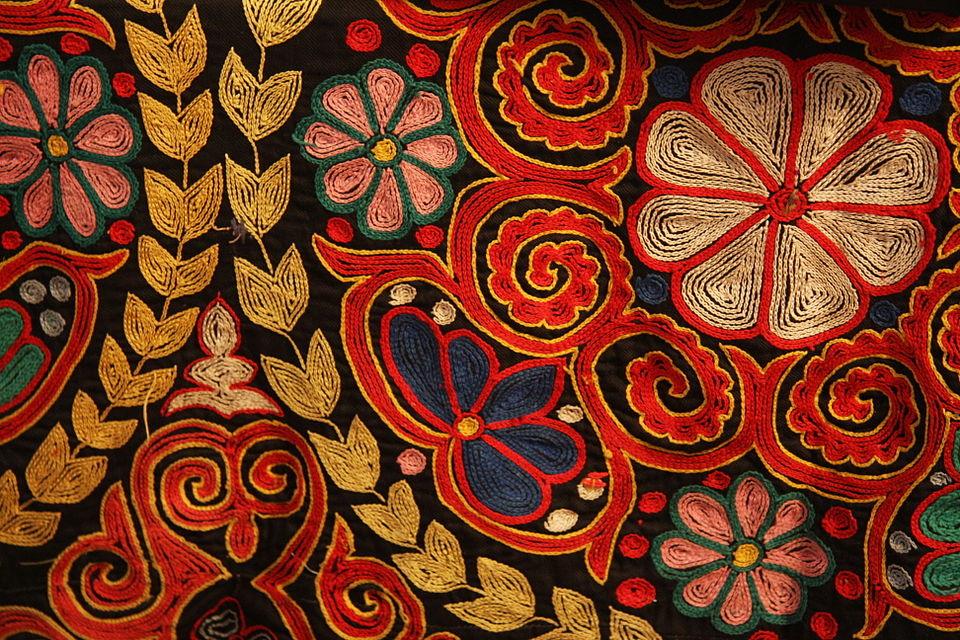
Chain Stitch Embroidery Kazakh Rug
A better stitch was found in the Lockstitch.
The chain stitch is still used today in clothing manufacture, though due to its major drawbacks, it is generally paired with an overlock stitch along the same seam.
History of Quilting and the Sewing Machine
Lockstitch
The lockstitch uses two threads, an upper and a lower.

Lockstitch Seen From The Side
Lockstitch is the familiar stitch performed by most household sewing machines and most industrial “single needle” sewing machines, using two threads, one passed on by means of a bobbin driver. As a result, a lockstitch can be formed anywhere on the material being sewn; it does not need to be near an edge.
History of Quilting and the Sewing Machine
ZigZag Stitch
A Zigzag stitch is a variant geometry of the lockstitch. It is a back-and-forth stitch used where a straight stitch will not suffice, such as in preventing raveling of a fabric, in stitching stretchable fabrics, and in temporarily joining two work pieces edge-to-edge.
When creating a zigzag stitch, the back-and-forth motion of the sewing machine’s needle is controlled by a cam. As the cam rotates, a finger like follower that is connected to the needle bar rides along the cam and tracks its indentations.
As the follower moves in and out, the needle bar is moved from side to side. Very old sewing machines lack this hardware and so cannot natively produce a zigzag stitch, however there are often shank-driven attachments available which enable them to do so.
History of Quilting and the Sewing Machine
Overlock
Overlock, also known as “serging” or “serger stitch”, can be formed with two to four threads, one or two needles, and one or two loopers.
Overlock sewing machines are usually equipped with knives that trim or create the edge immediately in front of the stitch formation.
Household and industrial overlock machines are commonly used for garment seams in knit or stretchy fabrics, for garment seams where the fabric is light enough that the seam does not need to be pressed open, and for protecting edges against raveling.
Machines using two to four threads are most common, and frequently one machine can be configured for several varieties of overlock stitch.
Overlock machines with five or more threads usually make both a chainstitch with one needle and one looper, and an overlock stitch with the remaining needles and loopers. This combination is known as a “safety stitch”. A similar machine used for stretch fabrics is called a mock safety.
Looper Explained – This is located near the needle. It is a small, hook-shaped mechanism that aids in the stitching process. The purpose of the looper is to take the thread from the needle and pull it through.
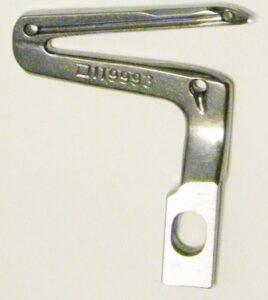
Looper Example. This Shows Juki Make.
History of Quilting and the Sewing Machine
Coverstitch
Coverstitch is formed by two or more needles and one or two loopers. Like lockstitch and chainstitch, coverstitch can be formed anywhere on the material being sewn.
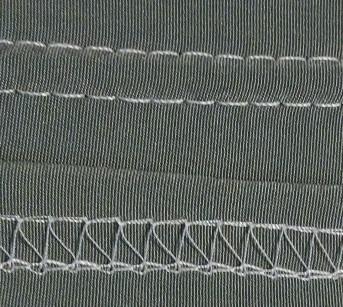
Coverstitch Example Two Sides Of A Coverstitch
One looper manipulates a thread below the material being sewn, forming a bottom cover stitch against the needle threads.
An additional looper above the material can form a top cover stitch simultaneously.
The needle threads form parallel rows, while the looper threads cross back and forth all the needle rows.
Coverstitch is so-called because the grid of crossing needle and looper threads covers raw seam edges, much as the overlock stitch does. It is widely used in garment construction, particularly for attaching trims and flat seaming where the raw edges can be finished in the same operation as forming the seam.
History of Quilting and the Sewing Machine
Sewing Machine Museums
England – London
London Sewing Machine Museum
With over 600 sewing machines it is one of the most
interesting private collections of its kind in the world.
Located in an industrial warehouse on the edge of Tooting and Balham it is only open for 3 hours per month.
Created by one man the focus of the museum is on the history of the sewing machine between 1850 and 1950.
Included in the collection is a sewing machine made in 1865 and given to Queen Victoria’s first born daughter.
History of Quilting and the Sewing Machine
Japan – Brother – Nagoya
Brother Museum
Brother Sewing Machines started in 1908 and became an international corporation in 1955. They are very popular choices when it comes to all sorts of sewing, embroidery, quilting, and multi-use machines.
The Brother Museum is located in their founding location of Nagoya Japan
History of Quilting and the Sewing Machine
Scotland – West Dunbartonshire
SINGER Glasgow
Recognised as a Nationally Significant Collection by Museums Galleries Scotland West Dunbartonshire Council’s Singer Sewing Machine Collection and Singer Archive has an outstanding collection of machines and artefacts from the Singer Sewing Machine Factory.
The collection shows the history and development of sewing machines and is the largest in Europe. It includes some of the first sewing machines from 1850. The museum also has a rare first model of Singer’s Number 1 and the first domestic model, the Turtleback.
History of Quilting and the Sewing Machine
U.S.A. – Washington D.C.
Not specifically a sewing machine museum but exhibiting machines of interest is the Smithsonian National Museum of American History.
It has a Singer 24 Chain Stitch Sewing Machine made in 1910 and a history of the Singer Corporation and sewing in America.
In addition one of the first commercial skyscrapers in the United States was the Singer Tower in New York which was also Singer Headquarters. When built it was the tallest building in the world and the museum have a scale model of it.
History of Quilting and the Sewing Machine
U.S.A. – Philadelphia, Pennsylvania
Again not specifically a sewing machine museum. However at the Franklyn Institute you can see the inner workings of antique sewing machines and learn how they operate.
History of Quilting and the Sewing Machine
England – Redditch, Worcestershire
Have you ever thought about NEEDLES?
Whilst different areas become famous for different industries and skills Redditch became famous for needles and fishing tackle manufacture.
So famous in fact that at one time Redditch produced 90% of the world’s needles.
There is a museum opened in 1983 by Queen Elizabeth II dedicated to the history at the Forge Mill Needle Museum in Redditch.
History of Quilting and the Sewing Machine
U.S.A. – Tulsa, Oklahoma
The owner of the Vintage Sewing Machine Museum originally only wanted to learn enough to re-upholster his boat cushions. He became so enthralled with the whole sewing process that he wanted others to know about it.
On display are 1,300 domestic and industrial machines as well as old and interesting vintage sewing machines.
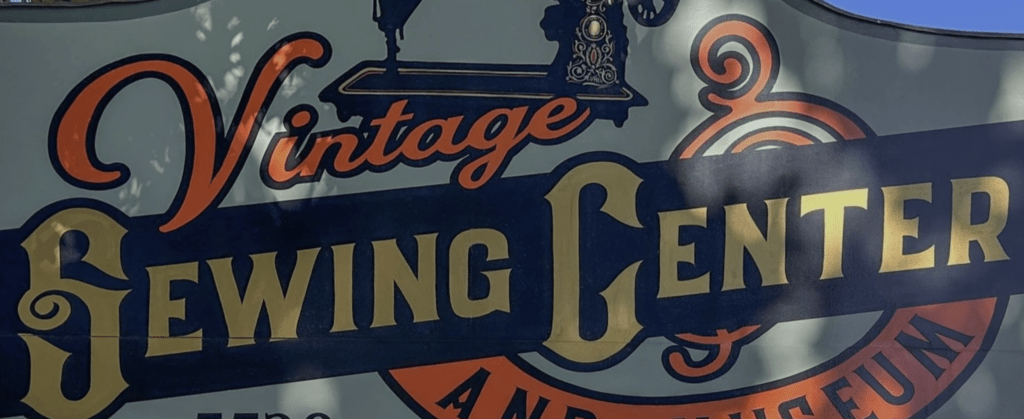
The emphasis of the museum is to encourage you to learn to sew and try out the vintage machines as well as take an informative tour.
History of Quilting and the Sewing Machine
England – Blackburn, Lancashire
A small family business established in 1903 in Blackburn have a collection of over 100 sewing machines.
They can be seen online HERE or you can visit them in what is a fully functioning retail fabric and domestic industrial sewing machine shop.
History of Quilting and the Sewing Machine
Fabric and Textiles
Quilters to sew and quilt need fabric. If textiles is something that interests you there is know better place to start than at the Textile Society.
History of Quilting and the Sewing Machine
Sewing Machine Manufacturers
Baby Lock
Baby Lock – Tacony brand. The Tacony Corporation is a family-owned manufacturer and wholesale distributor of amongst other things, sewing machines. It was started in 1946 by mechanic Nick Tacony from the basement of his home. They are based in Fenton, Missouri, USA and has approximately 750 employees.
Bernina
Bernina – Founded in 1893 in Steckborn, Switzerland, by Swiss inventor Karl Friedrich Gegauf (1860–1926). It is a privately owned international manufacturer of sewing, sergers and embroidery systems.
The invention by Karl Friedrich Gegauf in 1893 of the world’s first hemstitch machine capable of sewing 100 stitches per minute is considered the official founding year of Bernina.
The Bernina International model 105 was the company’s first sewing machine and was manufactured from 1932 to 1945.
Brother
Brother – Japanese sewing machine company established in 1908 as the Yasui Sewing Machine Co. for sewing machine repair service. It was the predecessor to BROTHER INDUSTRIES, LTD., of Nagoya, Japan and started mass-producing home sewing machines in 1932.
ShangGong Group (SGSB Co. Ltd) own the brands: Dürkopp Adler, Zoje and PFAFF.
Dürkopp Adler
Dürkopp Adler – Dürkopp Adler is A German manufacturer of industrial sewing machines and material handling systems that are used in the manufacture of garments and upholstery. Based in Bielefeld, Germany.
Zoje
Zoje – A Chinese company founded in 1994. It has an annual output of 800,000 sewing machines. Focus is on leading technology and industrial innovation with advanced automation equipment.
PFAFF
PFAFF – Founded by instrument maker Georg Michael Pfaff (1823–1893) in Kaiserslautern, Germany, in 1862. Pfaff’s first machine was handmade and designed to sew leather in the manufacture of shoes. In 1885 he opened a sewing machine shop in London. Family owned for many years it made its one-millionth sewing machine in 1910.
Feiyue Group
Feiyue Group – The Chinese Feiyue Sewing Machinery Group is one of the largest non-state enterprises in China. It was founded by Qiu Jibao in 1986 and has headquarters in Taizhou, East China Sea coast of Zhejiang province about 300 km (190 mi) south of Shanghai.
History of Quilting and the Sewing Machine
Janome
Janome – Founded by Yosaku Ose in 1921 it is a Japanese Public Company. Janome also owns Elna.
Janome have many firsts within the machine industry.
1971 – For the industrial market they released the first sewing machine with both programmable and computerised functions.
1979 – The first to develop a computerized machine for home use. the first to offer professional style embroidery for the home market (1990) and the first to offer a long-arm quilting machine for home use (2003)
1990 – The first to offer professional style embroidery for the home market.
2003 – The first to offer a long-arm quilting machine for home use.
Janome – Elna
Elna – Is a Swiss brand and started as Ateliers Mécaniques de Précision Tavaro SA a division of the Tavannes Watch Company
Tavaro’s first sewing machine had no official name, just a model number (500890). However it was consistently referred to in sales literature simply as Elna.
A Spanish engineer Dr. Ramon Casas Robert was the creator of the machine and it is believed a working prototype was available by 1934.
However with the Spanish Civil War he was forced to emigrate to Switzerland. Living in a Geneva hotel room, lacking capital or equipment, Dr Ramon sold his patents to Tavaro through a holding company. The first Elnas left the factory in 1940.
Elna was a radical departure from its competitors, and its success permanently changed the home sewing machine market, introducing features now considered standard. With this advanced thinking it maybe why it caught the attention of Janome.
Juki
Juki – The Juki Corporation is a Japanese multinational manufacturer of industrial sewing and domestic sewing machines and is headquartered in Tama-shi, Tokyo.
Juki is one of the leading industrial machine manufacturers and I used to rank as the largest industrial sewing machine manufacturer in the world.
The company currently has manufacturing facilities in Japan, China and Vietnam with products selling on six continents in approximately 170 countries.
History of Quilting and the Sewing Machine
Merrow
Merrow Sewing Machine Company – See above
Necchi
Necchi – An Italian sewing machine manufacturer founded in 1919 in Pavia by Vittorio Necchi after taking over the family business.
The family business being a factory which employed 170 workers making cast iron spare parts for machinery and run since 1880 by his father Ambrogio Necchi.
The idea to design and start making sewing machines was as a result of his wife requesting one.
History of Quilting and the Sewing Machine
Singer
Singer – Founded in 1851 by Isaac Merritt Singer with New York lawyer Edward Clark
Viking – Husqvarna
Viking – Formerly named Husqvarna Sewing Machines
Founded in 1872, the company is best known for “smart” (computerized) sewing machines and sergers.
Toyota
Toyota – Although best known today for its cars it is also in the textile business and still makes automatic computerized looms and electric sewing machines which are available worldwide.
History of Quilting and the Sewing Machine
Return To Index Page
Return To Articles Page
All our content is researched and written fully by a human. We do not publish AI writing.