
History Of Malt Whisky
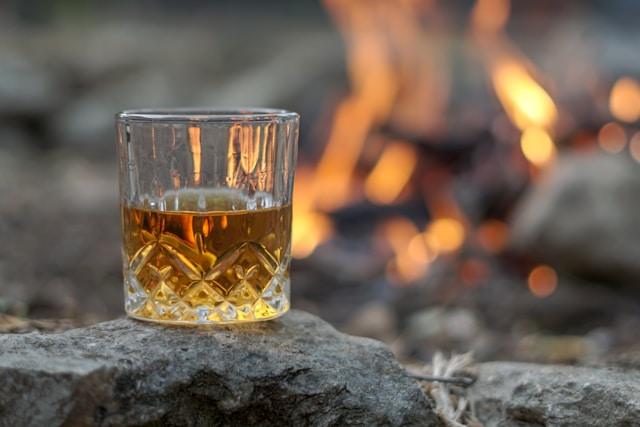
For those that drink MALT you will know that malt whisky is a fabulous drink. Drunk by men and women through the ages since distilling began.
But how did it all begin and how is it made?
History Of Malt Whisky
Why is Scottish whisky spelt whisky and Irish spelt whiskey with an ´e´?
Read on and you are about to find out why.
History Of Malt Whisky
Early Hunter Gatherers
As the name suggests early hunter gatherers lived on whatever they could find. One source will have been wild fruits such as grapes. These they picked as a source of nutrition and food. The fruits took up water from the soil and turned it into a sugary juice.
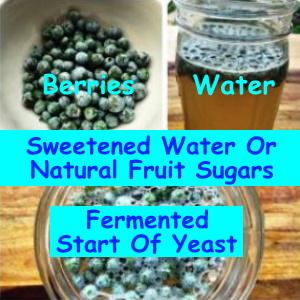
However the season was short and the fruit tended to fall to the ground or rot or spontaneously ferment into wines. It was the fermentation from the wild yeasts that turned it into alcohol.
History Of Malt Whisky
Making Your Own Yeast
It is possible to make your own yeast and here is one recipe that is publicly available.
If you try this then it is at your own risk but here are the instructions:-
1. Place three to four tablespoons of raisins in your jar.
2. Fill the jar ¾ full with water.
3. Place jar at constant room temperature.
4. Stir at least once a day for three to four days.
5. When bubbles form on the top and you smell a wine-like fermentation you have yeast.
6. Place your new yeast in the refrigerator.
History Of Malt Whisky
Early Nomadic Life
The earliest evidence of early people settling into organized societies rather than being nomadic was between 13,000 and 8,000 years ago. Several sites in the Middle East have been discovered that support this theory.
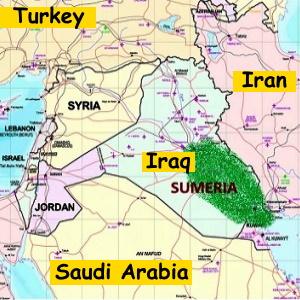
Being in a settled society meant that they started to grow crops. The first was a very early type of barley. Sumerian Civilization (modern day Iraq) clay tablets that have been found, sometimes described as the first recipes, depict the first explanation of beer making.
History Of Malt Whisky
Process Of Malting
By steeping barley and other grains in water is a process that is known as malting. To make whisky you need malt. The barley and grains are partially germinated and then dried. It is thought that this early form was done to make the grain edible. However what they were making was an early form of beer which they added to the grains to make a porridge like substance.
In all parts of the world as civilizations developed different grains were used with the same objective.
Bear in mind of course that no one knew what the other was doing or that they even existed. There was no telephone or internet in those days.
Alcohol was produced from such things as rice, rye and much later using potatoes.
History Of Malt Whisky
Geographical Divide Spirits Beer Wine
Over years a distinction set in between the warmer climates in the south around the Mediterranean where grapes provided the emphasis on wine and the harsher, colder north, where spirits were distilled.
Britain, Germany, Belgium and Czech Republic came in the middle and became well known for beer.
Places like Russia, Poland, Scotland and the Nordic and Baltic States became well known for spirits.
History Of Malt Whisky
First Barley Water
Greek history tells us that it is believed that ´barley water´ was first made by the Armenians. The country of what is now Armenia is landlocked and in the mountainous Caucasus region between Asia and Europe. To the west is Turkey and to the south Iran. It is one of the earliest Christian civilizations and a former Soviet republic.
The Romans called strangers Gallic people and the Greeks called them Celts.
These strangers, these Celtic settlements, became known for brewing beer. The most famous located in Germany (Baveria) Belgium and Bohemia.
Later came the formation of Abbeys with the Monks brewing beer.
Abbeys grew and so did brewing. In Scotland, England and Ireland many breweries began in locations where Abbeys where first established. Cork and Midleton near Cork in Ireland became famous distilling towns.
History Of Malt Whisky
St Columba
The community of the small Isle of Iona (Scotland) 3 miles long by 1 mile wide and located just off the Isle of Mull in the Western Isles were urged to grow barley by St Columbia.
St Columbia was an Irish abbot and missionary evangelist who was credited with spreading Christianity. He was born 721 AD and died aged 76 years in 797 AD. He is buried on Iona.
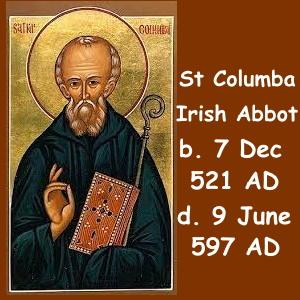
With his connections with North East Ireland and the Scottish Western Isles he also brought his teachings. As a result the Isle of Iona had a huge influence on the establishment of Christianity in Scotland, England and throughout mainland Europe.
Why this is important is because St Columba encouraged the growth of barley as a crop and barley is needed to make whisky.
It may not have been the intended consequence but if you look at the map both Ireland and the Scottish Western Isles subsequently became the home of many distilleries. Some very well known.
History Of Malt Whisky
First Malt For Distilling
Distilling is the process of boiling the liquid, collecting the steam and then condensing it back to a liquid.
It is not known how the process of distilling began but it is thought that the Phoenicians may have brought it to Europe. They having discovered it as a way of purifying sea water.
However it was from Lindores Abbey in Fife in the 15th Century that the first recorded purchase of malt for distilling was made.
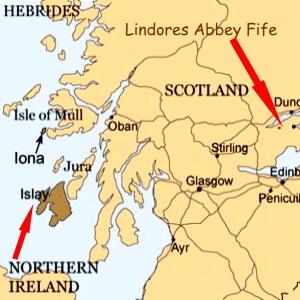
Whisky had probably been made for a considerable time before but in 1494 Friar Cor placed on record with the Scottish Exchequer the purchase for the purpose of making ´aqua vitae´. The water of life.
Did you know that Scotland is home to over 130 malt and grain distilleries? This makes it the greatest concentration of whisky production in the world.
History Of Malt Whisky
Oldest Licensed Distillery
The oldest licensed distillery in the world is Bushmills in Northern Ireland. It was granted a license to distill in 1608.
History Of Malt Whisky
Water Of Life
It is believed that the water of life was called many things in many languages but that in Gaelic it became known as usky, which in English then became whisky. In Ireland it is spelt with an e added making it Whiskey. In some countries Vodka was referred to as the water of life.
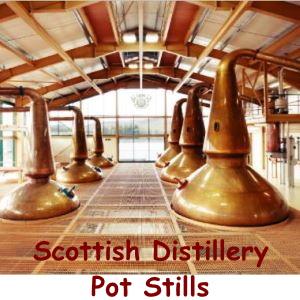
Spirits are made in a device that resembles a cooking pot or kettle. This is how it was distilled and malt whisky is still made this same way today.
The early process sometimes did not turn out as expected. As a result the spirit was flavoured with spices or fruits.
History Of Malt Whisky
Scotland Plain Malt
It was in about 1750 that Scotland wanted to make a clear difference between spice or fruit flavoured spirits and plain malt.
It was also about this time as Britain advanced towards the Industrial Revolution that they developed their own distinct flavours for beer. Different from the blonde beers of Europe.
History Of Malt Whisky
International Drink
We generally think of whisky as being Scottish but it may or may not surprise you that there are thousands of drinks around the world calling themselves whisky. It can be Scottish, Irish, Welsh, Japanese, Swedish, Finish, American or some other country. Some are excellent according to individual taste and appreciation of the amber liquid.
History Of Malt Whisky
Scotch Whisky – Malt Whisky Recipe
Local Water
A Grist Comprising Malted Barley Only
Traditionally A Degree Of Peat
Pot Stills Usually Designed And Built In Scotland
AND
Aging In Oak Casks
History Of Malt Whisky
The 6 Stages Of Whisky Production
1. MALTING The malting process begins by soaking dry grains in cold water in order to revive them.
2. MASHING Malted barley is ground in a mill into a coarse flour called grist
3. FERMENTATION The hot sweet liquid is called Wort and is drained off, cooled and stored. Wort often tastes sweet like a green tea.
4. DISTILLATION Distillation of the Worts enables concentration of ethanol.
5. MATURATION The new make spirit may be diluted slightly with water prior to filling into oak casks. In Scotland these are left to mature in peace and quiet for a minimum of three years.
6. BOTTLING The bung is removed, the cask rolled on its side and the whisky allowed to disgorge into a tank and then bottled.
Distillers tend to be traditional in what they do. This is because any changes they make may not become apparent for maybe another 5 or 8 or 10 years.
Only the best barley is used and distillers will buy the barley based, not necessarily on varieties but today on scientific criteria of such things as moisture content, nitrogen and corn size.
History Of Malt Whisky
Working Staff
A whisky distillery can have Maltmen, Mashmen, Tun Room Men and Stillmen. They can be male or female but traditionally it has been a male domain.
Some will also have their own Coopers and Coppersmiths.
Each has a specific job to do in the making and distillation of malt whisky.
Some distilleries will grow their own barley and therefore have complete control over quality and the whole whisky distilling process.
Everything and everyone has a part to play in making a great malt whisky. Whether it be the water or barley, how the stills are looked after or the casks they are stored in to give it that great special and unique flavour.
History Of Malt Whisky
Distillery Science
The job of being a distiller should never be under estimated. It is an art, a skill, almost a science.
Whisky is usually taken from the still somewhere at between 68 and 75% alcohol. It is then entered into the casks and maybe a little water is added to reduce it down and help it mature.
The science and skill comes with the experience of the distiller.
There is a loss of alcohol during ageing and what the distiller needs to know and take account of are the outside factors that affect maturity.
Such things as the temperature, the type, age and size of the cask, the height the casks are stored at. Even the the size, type and construction of the building it is stored in as well as the the weather during the years of maturity are factors the distiller needs to take account of.
History Of Malt Whisky
Micro Breweries and Distilleries
The popularity of whisky has grown through the growth of micro breweries or micro distilleries. These are owned by individuals or business partners as opposed to big business.
This has allowed for individuals to develop tastes and flavours specific to them and the area that they produce in. This also applies to the many entrepreneurs that have developed individual tastes in Gin.
For instance you can have the following morning furry mouth smokiness of drinking Scottish malt whisky from Islay (if you drink too much). Made infusing the liquid by drying the partially germinated grain using peat fires to a totally different flavour and taste of the Scottish Lowlands.
Such was the popularity of the amber liquid that in Scotland in the 1990´s and 2000´s not only were there openings of new distilleries but reopening of old ones.
History Of Malt Whisky
Single Malt
Single malt is the product of one distillery whilst a blended whisky is the product of more than one distillery.
However one should be aware that a distillery can make more than one type of whisky and blend the different types so to say that a blended whisky can only come from different distilleries is not entirely correct.
History Of Malt Whisky
Cask Aged
Whisky is traditionally aged in casks or barrels known as hogshead, butts or puncheons.
These formerly contained Sherry from Spain and dependent upon the type and flavour of Sherry they contained influence the taste of the whisky.
It could be sweet or dry, light or dark. Each has its own taste influences.
However sherry casks are expensive and many casks today are former Kentucky Bourbon and Tennessee whisky casks made of American oak.
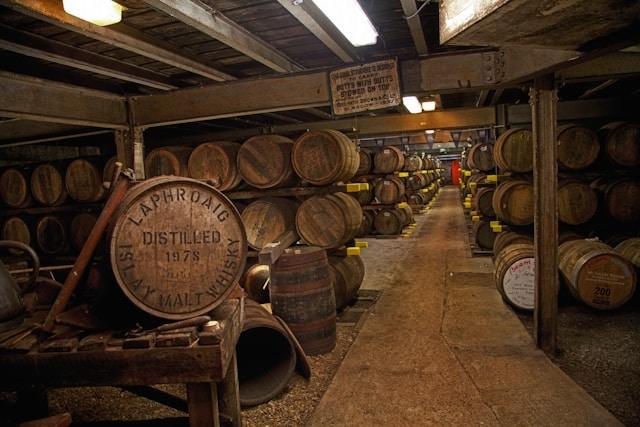
Some distillers will finish their whisky in former Rum, Bourbon, Sherry, French or Caribbean casks.
Each to enhance and get that special taste that makes a particular whisky unique.
History Of Malt Whisky
Influence Of Taste
The greatest influence on the taste of a whisky is the water and the barrels in which it is aged.
Many distillers, whisky connoisseurs and people who know about whisky believe that the cask holds the secret to a great malt.
It has never really been understood how a whisky matures such is the hold nature has over it’s secrets.
However the placing of the spirit in oak casks that have previously held sherry or other liquids are a major factor on the final flavour and taste.
Held in these casks for 5, 10, 20 or 40 years or more the oak gently expands and contracts with the seasons.
It is like a living thing influencing the spirit from it’s surroundings, temperature and location.
History Of Malt Whisky
Value and Individuality
To add value and individuality to their brand some distillers now label their whisky according to cask use.
As an example a little like olive oil producers who categorize their oil as Virgin or Extra Virgin Olive Oil. Extra Virgin being the best and first pressing with less impurities. This makes it more of a premium product that that can charge more for.
So it is with casks or barrels. First maturing liquid to use the barrel etcetera.
History Of Malt Whisky
Ice Or No Ice
A true whisky drinker does not chill the whisky in a fridge before drinking and neither do they add ice to their drink.
This is not to say that it should not be done.
It is all down to personal taste. Saliva in the mouth brings out the fullness of flavour or for some a little water is the preferred method to enhance it.
This may be especially true of cask strength whisky that can numb the mouth if not drunk with caution.
History Of Malt Whisky
Whisky Tasting Expert Advice
The following is advice from the Malt Master at a well known Highland distillery in Scotland. This individual has been Malt Master for over 20 years and regularly noses and tastes malt whiskies.
Whether you are tasting a few or a drink you have already purchased of whatever brand the following may be useful to you.
Firstly keep in mind that it is the aroma, the colour, the body and texture that are the most important characteristics of malt whisky.
Also keep in mind that you are looking for something that you like. Everyone has different preferences of each of the characteristics. For example like those that dink wine. Some have preferences for white, red, rose, sweet or dry.
Overall Fragrance
Is it light, fresh, delicate, pungent, fruity, malty, smoky?
Smoothness
Is it pleasant, mellow, silky, creamy, rounded, gentle, sharp?
Sweetness
Is it rich, fruity, bitter, spicy, sea weedy, pronounced, honey?
Colour
Is it pale, dark, rich, light, attractive, mellow?
Complexity
Is it balanced, stimulating, well matured, differing high notes, long after taste, deep, well rounded?
Body and Texture
Is it robust, heavy, light, long lasting, full bodied, good?
History Of Malt Whisky
Tasting and Nosing
A combination of tasting and nosing are required to appreciate the different characteristics of malt whisky. Of the two, nosing will alert your senses the most with the palate confirming what your nose tells you.
History Of Malt Whisky
How To Nose Malt Whisky
Nosing can be done in several different ways but the most popular way is by the Glass Method using a tulip shaped glass to help concentrate the aromas.
Adding Water – To release the rich bouquet and flavour of the whisky add a small amount of water
Shaking – With the palm of your hand cover the glass and shake firmly but carefully
Nosing – Putting your nose deep inside the glass take two sharp sniffs
History Of Malt Whisky
How To Taste Malt Whisky
Tasting – Add a small amount of water, take a sip and swirl it around the mouth before spitting it out or drinking it.
Between Tastings – Sip still water
History Of Malt Whisky
Cask Strength
Cask strength whisky is whisky that is undiluted and even after evaporation can be substantially stronger than shop bought whiskies.
However what cask strength allows is for the drinker to decide at what strength he or she would like to drink it.
History Of Malt Whisky
All our content is researched and written fully by a human. We do not publish AI writing.